Episode Summary:
Many parents believe that protecting their children from every struggle is an act of love, but what if that protection is actually preventing them from becoming capable adults?
In this episode, Dr. Margaret Paul clarifies why avoiding natural consequences and over-managing a child’s life can lead to long-term patterns of entitlement, anxiety, and a lack of self-confidence. She explains the deep value of allowing children to experience failure while they are young, using the example of a ten-year-old struggling in school to illustrate the shift from a power struggle to personal responsibility. By understanding the difference between rescuing and supporting, you can learn to step back as a controller and step forward as a role model who demonstrates true self-respect and emotional health.
Transcription:
Hi everyone. Welcome back to the Inner Bonding Podcast. I’m Dr. Margaret Paul and today’s episode is a topic that can bring up a lot of anxiety for loving parents — and that is the deep value of allowing our children to fail when they are young, rather than doing everything we can to make sure they never struggle. I hope you stay to the end because I’ll be sharing how you can become the role model that your children need you to be.
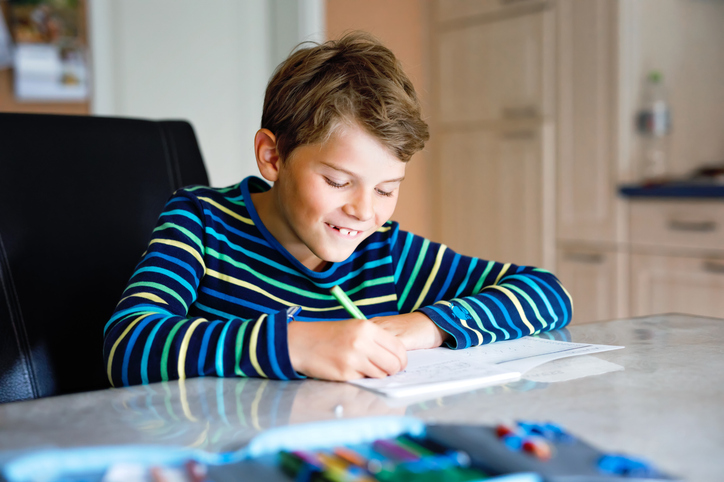
My client, Gloria, consulted with me because her 10-year old son, Dylan, was failing in school. “He refuses to do his homework,” she told me. “No matter what consequences I impose, like not texting with his friends and not playing video games, nothing changes. He just won’t do any homework. His teachers are complaining to me, and I don’t know what to do.”
Gloria’s experience with Dylan was typical of the dilemma many of my clients face with their children. It was immediately apparent to me that Gloria and Dylan were in a power struggle that Gloria was losing.
The more she tried to control Dylan with her anger, threats, sitting with him to do his homework, and applying consequences, the more resistant he became.
“Gloria,” I said to her, “what I’m going to suggest to you will likely be very hard for you, but since I’ve seen this work over and over, I hope you try it. Sit down with Dylan and let him know that how he does in school is entirely up to him – that you are no longer going to be involved in his schoolwork. Let him know that you will love him whether or not he does well, and that he can fail if that is what he wants without losing your love. Let him know that if he wants your help, to ask you and you will help him. Then back out completely. Don’t ask him about his homework or tests, and if the school contacts you, let them know that they need to deal directly with Dylan.”
Gloria decided to do this, even though letting go of trying to control Dylan was very challenging for her. For a few months, Dylan continued to resist doing his schoolwork, and then slowly, when he finally realized that there was no pressure to succeed, he started to want to do better – for himself, not for his mother.
Gloria let me know that six months after she completely let go of control, Dylan was doing well in school, and their relationship had greatly improved. If she had continued to try to control Dylan and Dylan had continued to resist, he might not have been able to succeed if he went to college. It was far better to let him fail at 10 years old than in high school or college.
Gloria and her husband also worked on themselves to become loving role models for Dylan, their only child. They learned to role model more personal responsibility for themselves so that Dylan could learn from them to take responsibility for his wellbeing.
There is an old saying regarding children: “Do as I say, not as I do.” Whoever coined this phrase didn’t know much about children. Children often do not “do as we say.” We are the role models regarding how our children learn to treat themselves and others. We are their role models regarding whether or not they learn to take personal responsibility for themselves – physically, emotionally, financially, relationally, spiritually, and organizationally.
Do you avoid responsibility for your own feelings with substances or activities, or with shaming and blaming behavior toward yourself or others? Are you always late and is your desk a mess? Do you eat poorly and lack exercise? Are you often in credit card debt? Do you lack a connection with a spiritual source of love and guidance?
If you want your children to be on time, then you need to be on time. If you want your children to be healthy and fit, then you need to be healthy and fit. If you want your children to be honest, then you need to be honest. If you want to raise happy and peaceful children, then you need to role-model how to be happy and peaceful. If you want your children to have high self-worth, then you need to learn to treat yourself and them with kindness and caring. If you treat your children with caring and respect, but your children experience you shaming yourself and treating yourself as if your feelings and needs are not important, there is a good chance they will learn to disrespect themselves, as well as disrespect you.
For example, Martin grew up in a family where both of his parents were high achievers and made a lot of money. But his mother was a highly judgmental woman, and his father was always unhappy and worried about something. Is it any surprise that Martin does well financially, yet is constantly judging himself and others, and is often agitated over minor things?
Victoria grew up with a mother who was totally devoted to her. In Victoria’s mind, her mother was the ideal mother – kind, compassionate, and always ready to listen to Victoria and help her with her problems. Her hardworking father was also a kind and caring person. Yet Victoria has a hard time taking loving care of herself. She ignores responsibility for her own feelings, does not feed herself well, is often judgmental toward herself, and has a hard time getting things done. She is constantly seeking a man to fill her up and make her feel worthy. How did this happen with such loving parents?
While Victoria’s parents were loving to her, they were not loving to themselves. Victoria’s mother used food to avoid her feelings and was always giving herself up to please others. In addition, she could never quite get organized and was always late. Victoria’s father spent his life working hard and using TV to avoid his feelings. Neither of Victoria’s parents role modeled taking personal responsibility for their physical and emotional health. Victoria was shaped far more by how they treated themselves than by how they treated her. In fact, because they treated her so lovingly and treated themselves so unlovingly, Victoria grew up believing that it was others’ responsibility to love her and fill her, rather than her own responsibility. She grew up being entitled, needy, and demanding, rather than personally responsible.
Are you treating yourself the way your parents treated themselves? Is this what you are role modeling for your children? Do you want your children to be like you? As a parent, it is very important to take a look at what you are role modeling for your children – not only regarding how you treat others, but how you treat yourself. If there are certain values that you want your children to have when they grow up, they are far more likely to have your values if they deeply respect you. And they will not respect you if you do not treat yourself with respect. It is highly important, if you want your children to be happy, healthy, and personally responsible, to be a role model of happiness, health, and personal responsibility.
Doing your own consistent Inner Bonding practice and becoming a loving adult with yourself and with your children is the surest way to ensure your children will learn personal responsibility.
And this is exactly why I created my Love Yourself 30-Day video course If you’re looking to become a loving role model for your children, this is powerful way to learn to love yourself. You can learn more in the description below.
A parent who wants to be a loving parent has a dilemma in today’s parenting. If you’re a caring parent, you don’t want your children to hurt. You don’t want them to feel disappointed, left out, frustrated, embarrassed, or overwhelmed.
So when they forget their homework, you drive it to school. When they don’t study, you hover and manage or impose consequences. When they’re upset with a friend or they’re struggling, you step in to fix it. And this comes from your heart – from your love, empathy, compassion, and desire to support.
But you need to ask yourself an important question: What is your intention? Is your intention to avoid your own anxiety and helplessness? Or is your intention to help your child develop a strong, loving inner adult?
Instead of trying to protect your child from failure, disappointment, loss, mistakes, and life’s challenges, why not help them learn to take responsibility for their feelings and define their worth intrinsically rather than by their performance? They learn this through your role modeling and through their having experiences that don’t work out and then learning from them.
When a child is young, their mistakes are not generally life-shattering. They are opportunities to learn and grow, if you as parents allow them to learn from their mistakes and failures. This creates a foundation of resilience so that in college or in a work situation, they have the inner resources to manage the bigger challenges.
When they learn from you to be open to learning from life’s challenges, they learn to say, “That didn’t work — what can I learn?” rather than “I am a failure.”
When we consistently rescue, the child learns that they can’t handle mistakes, failures and life’s challenges, or that someone else will fix it for them, or that their worth depends on getting it right. And this leads to anxiety, or to entitlement or helplessness, or to a fear of trying, or to a lack of self-trust and self-confidence.
Not because they were loved too much, but because they were not allowed to develop their own inner loving adult.
Lovingly supporting your children doesn’t mean rescuing them.
So if your child forgets their homework, rescuing would be saying, “Oh no! I’ll bring it to you – I don’t want you to get in trouble.” Loving support would be saying “Oh sweetheart, that’s hard. I know you’re upset. What do you think you can do differently next time?”
In rescuing, you take responsibility. In supporting you offer empathy, compassion, and role modeling an intent to learn, which builds their problem-solving ability, their accountability without shame, their self-reflection, and their resilience. They can begin to internalize that they can face challenges and learn from them.
The hardest part of this is not the child’s discomfort – it’s your discomfort. When your children struggles, it can trigger your fear of being a bad parent or your fear of being judged.
So the real question is whether you can stay present as a loving adult while your child is in pain without abandoning yourself and without trying to fix or control your child. Can you show up as a loving, responsible adult role model for your children?
When children are allowed to fail with love and support, they develop their own loving inner voice that gives them the confidence to figure things out and know they will be okay even when things don’t go well. And they learn from their mistakes and failures rather than collapse. They become young adults who can take initiative, manage their time, take responsibility for their choices, recover from setbacks, and are better able to stay open to learning in their relationships. Instead of trying to be perfect to get approval, or resist personal responsibility, they learn to love themselves and share their love with others.
The bottom line is that letting a child fail does not mean that you are being a neglectful parent. It means that you are allowing your children to experience the natural consequences of their choices and you are supporting their learning in what is loving to themselves. It means raising a child who becomes their own loving inner parent, and that is one of the greatest gifts you can give your children.
In some ways, children are born more conscious than most adults. Because they have not yet developed their programmed mind – their ego wounded self – they are aware of their feelings and their guidance. However, they cannot yet take responsibility for their own wellbeing. So of course they learn to be personally responsible for themselves and take responsibility for the effect they have on others and on the planet by watching you. Not by hearing what you say, but by experiencing what you do.
Most of you who have children and are watching or listening to my podcasts, want to raise conscious, aware children. What does it mean to be conscious?
In my view, consciousness means that you are present in your body rather than being primarily focused in your programmed mind – that you are aware of your feelings, and you desire to take full responsibility for your feelings and wellbeing. It means that you are aware of your higher guidance and open to learning with the love and truth of your guidance. It means that you are aware of your thoughts and whether they are originating from your ego wounded mind, or through your mind from your guidance. It means that you deeply care about the effect your behavior has on others, while not taking responsibility for their feelings. It means that you are aware of your surroundings, aware of others’ intent, and aware of caring about the planet. You are awake.
You are the role model for consciousness. If you are practicing Inner Bonding throughout the day and taking responsibility for your own feelings, your children will learn to do this. If you are avoiding your painful feelings and suppressing them with addictions, or blaming someone else for them, they will learn to do this. If you are following your guidance, and supporting them in following their guidance, instead of trying to control yourself, others, and them, they will learn to do this. If you are peaceful and joyful, and operate from deep inner integrity, they will learn to do this.
If you respect the environment, they will learn to do this. If you care about others without giving yourself up or taking responsibility for others’ feelings, they will learn to do this.
Practicing Inner Bonding throughout the day is one of the very best ways of being a loving parent, a loving role model, and raising responsible, conscious children who naturally want to succeed, and who do well in school because they want to.
The more you become conscious, especially of your intention, the more opportunities your children have for developing their own consciousness and freedom of choice and even moving beyond you in consciousness.
Some children come into this life with a high level of consciousness – far beyond the consciousness of their parents.
They are our teachers, and hopefully their parents will recognize this. These children are older than their parents in their soul’s development and have much to offer their parents.
If you have a child whom you have recognized as wise beyond his or her years, you are indeed fortunate. All children can be our teachers, but children who have deep wisdom can offer us even more. Just because they have little bodies does not mean that they don’t have big wisdom from eons of experience as a soul.
However, being little, they may not know that they are so evolved. It is our responsibility as parents to support our children in being all they can be. It is sad when parents feel they have to compete with their children or try to control them and mold them into what the parents believe they should be, instead of relishing all that they are. If you have an extraordinary child, it is your responsibility to do your inner work and reach a point where you can fully support your child, instead of feeling threatened by his or her wisdom, talents, or achievements.
The consistent, ongoing practice of Inner Bonding not only allows you to let go of controlling and become a great role model for your children, it supports you in allowing yourself to be taught by your children, and learn and grow as a loving adult. What a gift this is!
If you related to today’s episode and you’re ready to become a loving role model for your children, I invite you to check out my 30-Day Inner Bonding Love Yourself video course. It’s designed for anyone who wants to learn Inner Bonding, deepen your Inner Bonding practice, and develop your powerful loving adult. You’ll find the link in the description.
Thank you for joining me today, and I’ll see you in the next episode.
I’m sending you my love and my blessings on your healing journey.