
Episode Summary:
In this episode, you will learn the true definition of personal responsibility beyond chores and rules, uncovering how your emotional regulation and intent shape your child’s behavior. You will discover why common patterns like blaming, people-pleasing, or avoiding conflict teach self-abandonment, and how shifting from control to an intent to learn creates genuine connection and safety.
You will also explore practical ways to respond when triggered, how to repair ruptures with accountability when you lose your temper, and how to set healthy boundaries with kindness. Finally, Dr. Margaret leads an experiential reflection to help you step into your Loving Adult and cultivate deep self-trust within your family.
Transcription:
Hi everyone, and welcome back to the Inner Bonding Podcast. I’m Dr. Margaret Paul and today’s episode is about a very important aspect of parenting and is also an important of aspect concerning anyone working with children – which is what it means to be a role model for children regarding personal responsibility. Be sure to stay to the end because I’ll be sharing how you can learn more about what it means to take personal responsibility for yourself and become the role model your children need.
Becoming this loving role model may be one of the most important gifts you can give your children, because while you can teach rules, offer guidance, set appropriate limits, and provide structure, what truly shapes a child is not just what you say, but mostly what you do and who you are. Children learn far more from your way of being than from your words. You can’t teach personal responsibility to children if you are not modeling it through your own personally responsible behavior.
Let’s start by redefining personal responsibility. Many people think it primarily means doing your chores, following through, and being reliable, and all these are important, but these are just a part of it. True personal responsibility goes much deeper.
It means taking responsibility for your feelings, your thoughts, your intention, your actions, and for all your choices. It means recognizing that you are responsible for how you treat yourself and how you treat others.
This is very different from blaming others, such as saying things like, “You made me angry,” or “You are upsetting me,” which parents often say to their children. I clearly remember both my parents telling me that I made them angry, without ever telling me what I was doing that was so upsetting to them.
Children are incredibly perceptive. They don’t just listen to what you say. They learn from how you handle stress, how you speak to yourself, how you respond to conflict, how you treat them, and how you treat others. If you tell children that they are responsible for their feelings, but they see you getting angry and blaming them or others, acting like a victim, giving yourself up, reacting impulsively, shutting down, avoiding taking care of yourself, or being self-critical, they may learn to do the same. They learn way more from your energy and your actions than from your words. Children tend to internalize your patterns, and they will either primarily absorb your wounded selves, or your loving adult, depending on what you are primarily role modeling.
As you know if you have been listening to my podcasts, in Inner Bonding, there are two intentions to choose from – the intention to control getting love, avoiding pain, and feeling safe, and the intention to learn about loving yourself and others. This is the foundation of personal responsibility.
When your intention is to control, you may try to control your children with harshness, anger, judgments, shaming and guilting, hitting or other physical punishments, threats, withdrawal of love, or giving in to them – sacrificing your own feelings and needs. You might be operating as either an authoritarian parent or a permissive parent, both coming from your wounded self with neither being loving parenting with personally responsible role modeling.
When you are open to learning, you explore with curiosity and compassion the underlying reasons your children are acting out, resistant, or underperforming at school, and you also explore with curiosity and compassion what is getting triggered in you and what is loving to you in the face of their challenging behavior. When you do this, you are role modeling openness, love, and personal responsibility for your own feelings. Children instantly feel this difference.
However, many parents unknowingly model self-abandonment. For example, if you ignore your feelings, your children might learn to ignore theirs. If you judge yourself, even if you don’t do it out loud, your children might absorb your self-judgments and judge themselves. If you caretake and people-please to try to get approval, your children either learn to people-please to get approval, or they become bratty, expecting others to give themselves up for their feelings and needs.
If you avoid conflict, your children might not learn effective ways of managing conflict.
This isn’t about blaming you, because you likely also had poor role modeling regarding how your parents treated you and how they treated themselves. It’s about you becoming more aware of your choice of intention. It’s only through your awareness of your intention to control that you can consciously choose the intent to learn about love.
So what does it actually look like to model personal responsibility?
Here are some real-life situations.
Your child says or does something that upsets you and you get triggered. When your child is upset, it’s easy to try to fix or dismiss their feelings or get upset yourself.
Maybe they ignore you, or have a temper tantrum, or dawdle when there is a time issue. What do you generally do? Do you get harsh? Do you threaten them? Do you blame them, telling them they are being disrespectful? Do you ignore their behavior and give in to whatever they want or whatever they are doing? None of these responses are role modeling taking loving care of yourself, which would be role modeling personal responsibility.
If you were open to learning with yourself and with them, what would you do differently?
Part of teaching personal responsibility means helping your children connect with themselves, rather than abandon themselves. You might say something like, “I can see you’re really upset. Do you want to tell me about what’s upsetting you?” This teaches them that their feelings matter to you.
Your loving response can come from being open to learning with your higher self about what would be loving to you and to your child in the moment. It’s not like there are cookie-cutter responses that apply to every situation. Each situation requires you to tune into what’s loving to yourself and your child in the moment.
Other responsible responses might be holding a crying child with compassion but not giving in to their demands. Or if a child ignores you or dawdles, you might want to tune into your tone of voice: are you being controlling? Is your child resisting your controlling energy? If this is the case, shift your intention to being loving, get down to your child’s level, look them in the eye, and then say whatever it is they ignored.
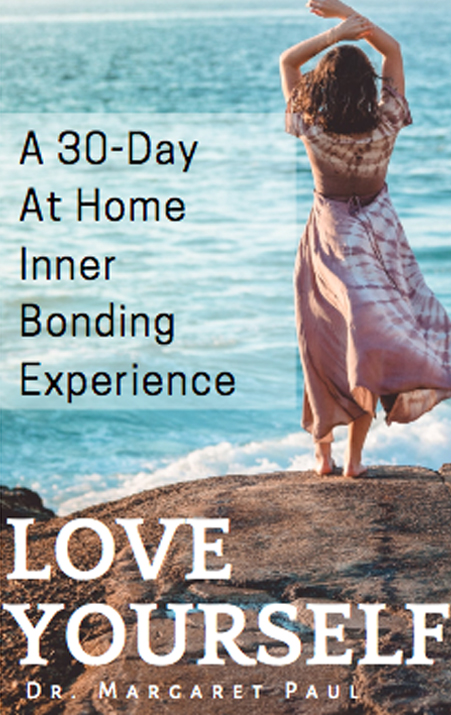
Before I move on, I want you to know if you are ready to learn to be a loving role model, then be sure to take my Love Yourself 30-Day video course. You can learn more in the description below.”
What I’m trying to illustrate is that what you have control over is your own intention, and the intention to be loving to yourself and to them will open the door to creative ways of dealing with challenging situations. Discovering the loving actions is a creative process, with huge dividends.
What’s important is to be aware of your own feelings so that you can role model self-regulation and communicate with love and compassion rather than with blaming, controlling energy.
The more you learn to regulate your own feelings and learning from them rather than judging or ignoring them, or blaming your children or others for them, the more your children will learn to regulate and learn from their feelings.
Of course, it’s not always easy to self-regulate and be open to learning. We are human and humans make mistakes. What does loving parenting look like when you lose it with your kids?
You can say something like, “I’m sorry I yelled at you earlier. It wasn’t about you, and it wasn’t loving.” This is also good role modeling, letting your child know that mistakes are okay, that accountability matters, and that repair is possible.
At the heart of being a personally responsible parent is developing your loving adult through your Inner Bonding process..
As a loving adult, you can role model staying present in this moment with an intent to learn, regulating your emotions, and taking loving actions. When you parent from your loving adult, you are mostly no longer reactive from your wounded self. Your children not only feel safer, but they learn to develop their own loving adult.
Parenting is a powerful spiritual path, because your child will likely trigger everything that is unhealed and unresolved within you, such as your impatience, your fears, your wounds and false beliefs, and your various forms of controlling behavior, Each moment becomes an opportunity to notice if you are reacting from the fear and false beliefs of your wounded self with your intent to control, or responding from love as an open, loving adult with a intent to learn.
Personal responsibility also includes boundaries. Children need to learn that while their feelings and needs matter, other people’s feelings and needs also matter, and that limits are part of love.
When you set a boundary with clarity and kindness, you model that you respect yourself and you respect them.
For example, a boundary I set with my kids was when we went grocery shopping. They loved to go with me, and I let them know that if they whined about what they wanted to buy that I knew wasn’t healthy for them, then they couldn’t go with me and would have to stay with my mother or a friend. Because they really wanted to go, they never whined or complained when we were shopping.
You might think, “Well, isn’t this controlling?” Yes, but you need to control what you can control, which is your choices regarding taking loving care of yourself. Control isn’t bad – it just doesn’t work when you try to control others and outcomes. But as a loving adult, you need to control your own intention, and you need to set limits for your children’s unacceptable or dangerous behavior. Just as you don’t allow a small child to run into the street, you need to set appropriate limits for their health and safety and your own wellbeing.
When you learn to model personal responsibility, your children feel safer and they learn to be less reactive. They learn to develop self-trust, and they learn to be self-reflective, not because you were controlling them but because they experienced it in watching you.
I’d like to do a little process with you, so if you can, close your eyes and take a deep breath. Bring to mind a recent situation with your child or student or niece or nephew that felt challenging. Notice what you felt and how you responded. If you are not happy with your response, then ask yourself without judgment, “Was I acting from control or from love?”
Just notice. If you responded as a loving adult, wonderful! But if you didn’t, imagine your loving adult stepping in, and imagine responding with gentleness and compassion, with both yourself and the child. And imagine being open to learning in the situation and asking your higher guidance, “What would it look like for me to model personal responsibility here?” Be open and listen.
Being a role model for personal responsibility doesn’t mean being perfect. It means being willing to learn, reflect, and grow. Your children don’t need a perfect parent; they need for you to be a loving parent as much as you can. There is actually no such thing as a perfect parent, because each child is different and each child needs different things from you, which you can tune into when you are open to learning with your guidance.
When children grow up with a parent who models personal responsibility, they develop emotional awareness, resilience, self-trust, accountability, and hopefully empathy and compassion. They eventually learn that they are responsible for their own life, and this becomes the foundation for healthy relationships, meaningful work, and inner peace.
You might want to ask yourself, “How am I modeling personal responsibility in my daily life?” Not just with your children, but with yourself, because the way you treat yourself is the most powerful teaching your child will ever receive. If you want them to be loving to themselves and others, and take responsibility for their feelings and their life, then you need be loving yourself and others, and take responsibility for your feelings and wellbeing.
If today’s episode was helpful to you and you’re ready to learn to become a loving role model for children, I invite you to check out my 30-Day Love Yourself video course. It’s designed for anyone who wants to learn to love themselves, share their love with others, and role model personally responsible behavior. You’ll find the link in the description.
Thank you for joining me, and I’ll see you in the next episode. And thank you for your willingness to learn, grow, and love more deeply.
I’m sending you my love and my blessings on your healing journey.