
Episode Summary:
Do you struggle with worrying about things beyond your control? In this episode, Dr. Margaret Paul explores how chronic worry fuels fear and disconnects you from the present moment—and how Inner Bonding can help you cultivate self-love, accept uncertainty, and find inner peace.
Learn the difference between responsible thinking and obsessive worry, why caring doesn’t require worrying, and how imagined worst-case scenarios can frighten your inner child. Discover how developing your loving adult helps you soothe yourself and take loving action instead of spiraling into fear.
You’ll also learn how returning to the present moment, opening to your inner and higher guidance, and accepting what you cannot control can support emotional responsibility. Explore how to trust your ability to handle life one loving step at a time.
Transcription:
Hi everyone, and welcome back to the Inner Bonding Podcast. I’m Dr. Margaret Paul, and today we’re going to explore a struggle that affects nearly everyone at some point in life, which is worrying about things that are beyond your control. Be sure to stay to the end because I’ll be sharing how you can learn more about shifting out of this worry.
Many people live in a near-constant state of mental tension, worrying about the future, about how other people feel about them, about the state of the world, about whether things will be okay, or worrying about money, health, relationships, or aging.
And often, the mind becomes trapped in endless loops of “what if?”
“What if something bad happens?”
“What if I fail?”
“What if I lose someone I love?”
“What if things fall apart?”
“What if I can’t handle it?”
“What if I make the wrong choice?”
I come from a family of worriers. My grandmother who lived with us, was addicted to worry, and she worried non-stop. My mother, who was also addicted to worry, was a champion worrier, so of course I learned to worry, which I was also a champion at until I started to practice Inner Bonding. Then I became aware of my false beliefs that were fueling my worry,
Many people assume worry is simply a normal part of life, but today I want to invite you to explore something deeper. Please consider that chronic worry is a form of attempting to control what cannot be controlled, which was my major false belief. But what if worry disconnects you from peace, guidance, presence, joy, and even your ability to respond effectively to life?
What I discovered regarding my false beliefs about worry is what I absorbed from my mother and grandmother – that worry is a form of control that can stop bad things from happening. Nothing much bad happened to my mother and she attributed that to her worry. My father never worried and nothing bad ever happened to him either, and my mother believed that her worry also stopped bad things from happening to him. But what her worry actually did do is make her a tense and not very happy woman who died suddenly of an abdominal aortic aneurism, perhaps exacerbated by her constant worry.
Inner peace does not come from controlling life. Peace comes from learning how to lovingly manage yourself within life.
At the core of chronic worry is the wounded self’s attempt to control outcomes.
The wounded self fundamentally believes: “If I worry enough, maybe I can prevent pain.” Of course, this usually happens unconsciously. Most people don’t wake up and think: “I’m going to mentally torture myself today in order to control reality.”
But underneath worry is often the belief that vigilance equals safety.
The wounded self believes:
- “If I stay alert enough, I’ll be prepared.”
- “If I think about every possibility, I can avoid disaster.”
- “If I mentally rehearse problems, I’ll stay safe.”
- “If I can predict everything, I’ll feel secure.”
But does worry actually create security? It certainly didn’t work that way for me, and when I have clients who worry a lot, I don’t see them feeling safe and secure. In fact, chronic worry often not only exhausts the nervous system and creates anxiety and reduces peace and joy, it also clouds judgment and disconnects you from your intuition. It can have a negative effect on your sleep, as well as weaken your immune system. Worry often keeps people stuck in fear instead of being able to take loving actions for themselves and others.
There is a big difference between responsible thinking and obsessive worry.
Responsible thinking says things like:
“I need to pay my bills.”
“I need to prepare for this meeting.”
“I need to schedule that medical appointment.”
“I need to save money.”
That’s the loving adult functioning.
But worry sounds more like:
“What if I get sick and can’t work?”
“What is my child fails in school?”
“What if I end up alone?”
“What if the person I love dies?”
“What if I fail?”
Worry tends to spiral into imagined catastrophes. The wounded self lives in imagined futures, while the loving adult lives in present reality.
One reason people worry so much is because uncertainty feels intolerable to the wounded self.
The wounded self desperately wants guarantees. It wants certainty about relationships, health, finances, children, success, the future, safety, and approval.
But life doesn’t offer certainty. Life is inherently uncertain. And this is deeply uncomfortable for the controlling wounded self. Due to the wounded self’s fear of uncertainty, many people spend enormous amounts of energy trying to create certainty when that’s not possible They constantly scan for danger,
analyze possibilities, replay conversations, predict outcomes, imagine worst-case scenarios, and ruminate about what to say to a person who’s upset with them. And ironically, this constant attempt to feel safe often creates the opposite of feeling safe, because no amount of worry can remove uncertainty from life.
The loving adult eventually learns: “I cannot control everything. But I can learn to handle what arises.” That is real emotional strength and emotional responsibility.
The wounded self says: “I must control life to feel safe.” The loving adult says: “I can care for myself and others even when life is uncertain.”
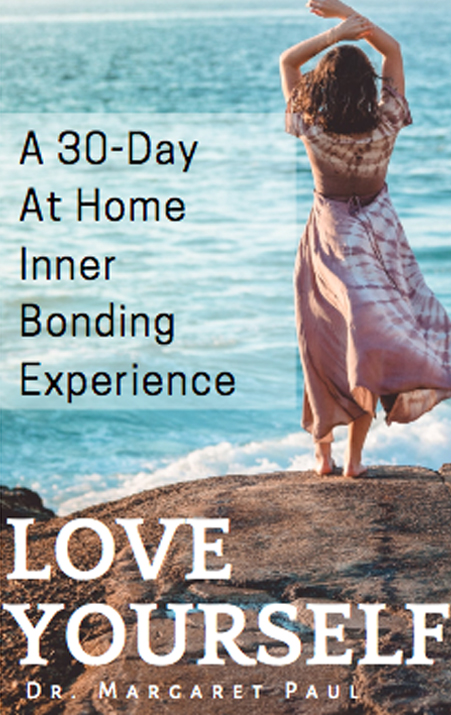
Before we move on, this is why I created my Love Yourself 30-Day course. If you’re looking to learn to stop worrying, this course is for you. You can learn more in the description below.
This shift in intention from controlling to loving yourself has a huge positive effect on how you feel, because chronic worry is actually a form of self-abandonment. When you worry, you are often abandoning the present moment and terrifying your inner child with imagined futures.
Think about it. If a frightened child came to you and said: “I’m scared,” would it help to say: “Yes, let’s spend the next five hours imagining terrible possibilities”? Of course not. But, this is often exactly what people do internally.
The wounded self catastrophizes, obsesses, ruminates, predicts disaster, and repeats fearful thoughts over and over.
And the inner child absorbs all of it. The body responds as though danger is happening right now. Stress hormones increase. Muscles tighten. Sleep suffers. Digestion is negatively affected, and the nervous system stays activated. Many people live in a nearly constant low-grade fight-or-flight state because of chronic worry.
And the inner child feels profoundly unsafe, not because of reality itself, but because of what the mind is continually doing.
The loving adult responds very differently. The loving adult accepts that uncertainty exist, that difficult things can happen in life, but also that we are not alone. We can turn to our higher guidance for support and seek the support of family, friends, and a therapist. We can learn and grow from challenges, take loving actions, and handle life one step at a time. The loving adult soothes rather than terrorizes the inner child.
Many people confuse worrying with caring. They think, “If I stop worrying, it means I don’t care.” But caring and worrying are completely different energies. Worry is fear-based and controlling, while caring is loving presence and responsible action.
For example, a loving parent cares deeply about their child, but chronic worrying does not help the child. In fact, anxious energy often transfers directly to children, and this is what happened to me. I took on my mother’s and grandmother’s worry, which made me a very anxious child. And I felt the opposite of seen and cared about. Their worry about me made me feel incompetent and not good enough. As I previously said, it wasn’t until Dr. Erika Chopich and I created Inner Bonding and I started to practice it that I was able to let go of my mother’s and grandmother’s anxiety that I had absorbed for so long.
You may care deeply about your health, as I do, but obsessively worrying about illness usually does not improve health, and it may worsen it due to the stress that worry causes.
Or you may care deeply about the world. But endless doom-scrolling and fear spirals don’t create loving contributions.
A loving thing to ask yourself is, “Is this thought leading to loving action or is it leading to fear?” This question alone can create awareness and healing.
The loving adult focuses on what can actually be done based on what is true now, and on what supports wellbeing, as well as what actions are loving and responsible. The wounded self loops endlessly in helpless fear, trying to control through worry that then just causes more fear.
Do you believe that if you worry enough, bad things won’t blindside you?
Do you mentally rehearse suffering ahead of time? Think about that for a minute – this means you suffer now about things that may never happen. The wounded self believes: “Anticipatory suffering protects me.” But does it? Usually not. And in fact, when difficult things do happen, you still feel pain anyway. Worry does not eliminate pain. It just causes more suffering.
And think back to how you handled past challenges. Did you handle them better than you imagined you would? Are you actually more resilient than your fearful mind believes? The loving adult understands that pain is a part of life and that you don’t need to create additional suffering through endless fearful thinking.
This is not denial. It’s emotional responsibility. It’s learning to stay grounded in reality rather than in worry and fear.
Perhaps your wounded self thinks you are still five or eight or 10 or 15. Ask your wounded self how old he or she thinks you are and you might be surprised, because often the wounded self doesn’t know that you are an adult and can handle life far better than when you were a child or adolescent.
The present moment is where peace exists. Most worry is about the future. The wounded self constantly leaves the present moment searching for certainty. But peace is found by returning to the present moment, the now.
Right now, in this moment, are you okay? Not next week or next year. Right now. Most of the time, in the present moment, we can actually handle what is here.
The loving adult continually brings attention back to reality – back to gratitude, to connection, to truth and to listening to your feelings and your inner and higher guidance.
This does not mean ignoring problems. It means addressing reality directly instead of living in imagined catastrophe.
One of the greatest casualties of chronic worry is disconnection from your guidance. When the mind is consumed with worry, you will likely lose access to your intuition, wisdom, creativity, and spiritual connection.
Worry and fear lower your frequency, making it impossible to connect with the high frequency of your guidance, while the intent to learn about loving yourself and others raises your frequency, and along with eating clean organic foods, raises your frequency high enough to access your guidance.
The wounded self believes: “I alone must figure everything out and control everything.” But the loving adult opens to learning with your inner and higher guidance for what’s loving to you.
Whether you think of this as intuition, spirit, God, higher self, divine guidance, or inner wisdom, there is a powerful intelligence available to all of us when we quiet the fearful, controlling wounded self.
This loving adult is in partnership with life rather than in a war against uncertainty. The loving adult asks questions of higher guidance, such as “What is the loving action now?” “What is actually within my control?” “What supports peace and truth?” “What is in my highest good and the highest good of all?” And then takes loving action when action is possible.
The loving adult learns surrender to what is – not helpless surrender and not giving up, but acceptance of reality. This may include accepting other people’s choices, accepting aging, uncertainty, impermanence, unpredictability, and your lack of control over outcomes. And paradoxically, acceptance often creates far more peace, effectiveness, and personal power than fear ever can.
So if you struggle with chronic worry, I invite you to bring compassion to yourself. Most worry comes from a frightened wounded self trying desperately to feel safe. But worry cannot create the safety you truly seek. Control cannot eliminate uncertainty. The deeper healing comes from developing your loving adult through your Inner Bonding practice. As you practice Inner Bonding and develop your loving adult, that’s when you can self-soothe and feel safe. That’s when you can stay grounded in reality and take loving actions on your own behalf and on behalf of others. That’s when you can seek the support you need, remain present in the now, open to your higher guidance, and feel trust in your ability to handle life as it unfolds.
You do not need to, and you can’t, solve your entire future today. You need to stay present enough to take the next loving step. Peace does not come from controlling life. Peace comes from learning to lovingly care for yourself and others within this life.
If today’s episode was helpful to you and you’re ready to learn to love yourself instead of continue to abandon yourself with worry, I invite you to check out my 30-Day at-home Course: “Love Yourself. It’s designed for anyone interested in learning, growing, and healing and will help you move beyond worry. You’ll find the link in the description.
Thank you for joining me today, and I’ll see you in the next episode.”
I’m sending you my love and my blessings on your healing journey.