Episode Summary:
What if the most important form of self-care has nothing to do with bubble baths or vacations?
In this episode, Dr. Margaret Paul explores one of the most overlooked dimensions of true self-care: learning to validate yourself. While external self-care has its place, she explains that no amount of outside validation from a partner, a parent, a boss, or social media can heal the wound of self-invalidation. That healing only happens from the inside.
Dr. Paul walks through why so many people grow up dependent on others to reflect their worth, what self-validation actually means (and what it does not), and how learning to see, hear, and honor your own inner experience transforms not just your relationship with yourself but with everyone around you. She shares practical ways to begin practicing self-validation, including how to name your feelings with compassion, mirror your soul’s qualities back to yourself, and stop outsourcing your emotional authority to others.
Come explore the deeper meaning of self-care in Self-Care: How to Validate Yourself and begin building the kind of inner safety that no one else can take away.
Transcription:
Hi everyone! Welcome back to the Inner Bonding Podcast. I’m Dr. Margaret Paul and today’s episode is about how to validate yourself, which is a major part of self-care. Be sure to stay to the end because I’ll be sharing how you can learn more about deeper self-love and self-care.
When many people think about self-care, they think about external things such as getting a massage, taking a bath, going on vacation, resting, or treating themselves with something they’ve wanted.
And while those things can be lovely and supportive, they don’t address one of the deepest human needs: The need to be deeply seen, understood, and validated. However problems arise when you expect others to validate you instead of learning to validate yourself.
So let’s talk about what self-validation really means and what it doesn’t mean. It doesn’t mean that you indulge yourself in things that are harmful to you or others, and it doesn’t mean excusing harmful behavior toward yourself or toward others, and it doesn’t mean avoiding responsibility for your feelings and instead blaming others, and it doesn’t mean telling yourself that you are always right.
It does mean compassionately acknowledging that your feelings matter and have important information for you. It means valuing your inner child – your true soul self and being open to discovering more and more about the many beautiful facets of your soul. Your soul is like a multi-faceted diamond and it’s your responsibility to discover these beautiful facets and truly see yourself, hear yourself, and learn to trust your feelings and inner knowing.
Most people were not validated as children. Were you told, “Don’t cry over spilled milk,” meaning “Don’t feel the way you feel.” Were you told you are too sensitive, or “That’s not a big deal,” or “Stop crying or I’ll give you something to cry about,” or “You have no reason to be upset.” Few of us were accurately mirrored for who we really are.
Did you learn that your feelings were not okay, that your inner experience didn’t matter, and not to trust what you know?
When this happens, people grow up seeking validation from others – from their partner, parents, friends, co-workers, bosses, social media, and maybe spiritual teachers.
But no amount of external validation can heal the wound of self-invalidation. That healing only happens when you learn to validate yourself.
It’s not surprising that so many people are addicted to seeking outside validation. As children, we were dependent on others to validate our feelings and needs, and to help us understand our experience, and to reflect our intrinsic worth. But when that didn’t happen consistently, we grew up hoping someone else would finally see us, understand us, and make us feel that we are okay.
The problem is that when you depend on others for validation, you give away your emotional authority, and you might feel anxious, hurt, or angry when others don’t respond the way you hope, and you likely lose touch with your own inner knowing.
Self-care begins when you stop outsourcing your worth. Self-care does not mean you stay stuck rejecting yourself. It means you stop abandoning yourself and start valuing yourself – your beautiful inner child.
You can’t be truly caring for yourself and judging and rejecting and invalidating yourself at the same time. You might think you are taking care of yourself because perhaps you eat well, get enough exercise and sleep, and rest when you need it, but if your inner dialogue is harsh, dismissive, or shaming, your nervous system never truly relaxes.
Self-validation calms the nervous system and reduces anxiety, depression, and shame. When you lovingly validate yourself, your inner child starts to feel safe inside and starts to trust you as a loving adult. When you show up for yourself as a loving, self-validating adult, your inner child knows he or she is npt alone, that he or she matters, and that you care about your own emotional well-being and inner peace.
Self-validation is not an extra – it’s foundational and is deeply restorative.
Self-validation is simple – but it requires presence. Here are a few gentle ways to practice it.
Instead of avoiding your feelings, it’s often helpful to name your feelings, but you might not always be able to name them, which is okay. For example, you might feel tight in your stomach or neck without knowing what the feeling is that’s causing it. That’s okay – it might take practice getting present with your feeling in Step 1 of Inner Bonding to be able to name them. Sometimes you might be aware of what you are feeling, such as sadness, anxiety, hurt, anger, numb, or empty. Your inner child feels seen and validated when you can name your feelings with compassion rather than with judgment.
Your inner child will feel seen and validated when you open to learning about what your feelings are telling you and approach this inquiry with compassion.
Your inner child feels especially validated when you take on the responsibility of defining your own worth – learning to see your inner child through the truthful eyes of your higher guidance. When you can see who you really are as a soul and mirror your beautiful qualities to your inner child throughout the day, you will feel so validated. Mirroring your essence might look like saying out loud to your inner child, “Your creativity is such a great gift,” or “Thank you for your kindness and your loving heart,” or “I just love your laughter.”
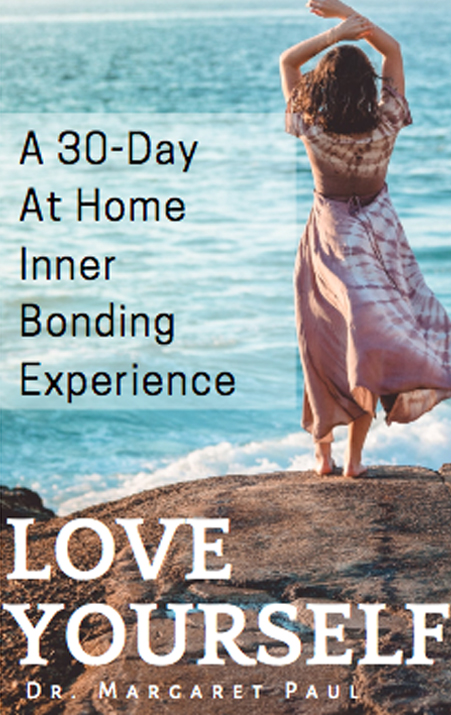
Before we move on, this is exactly why I created my very powerful 30-Day course, Love Yourself. If you’re looking to learn to truly love and validate yourself, then this course is for you. I walk you through step by step through learning how to learn to value yourself. You can learn more in the description below.
When you don’t validate yourself, you might ask others to do it for you, often without realizing it.
Do you find yourself arguing or defending to be understood? Or needing agreement to feel that you are okay? Or giving yourself up and complying with what someone else wants to please them and get their attention and approval? Or feeling angry and devastated when others don’t see you or get you? Or feeling invisible and dismissed?
When you validate yourself, you no longer spend a lot of energy trying to get others’ approval. You no longer take others’ lack of agreement or dismissive behavior personally. You realize that the other person not seeing you, not hearing you, not understanding you, or dismissing you is about them, not about you. They are likely in their wounded self and can’t see who you really are or can’t take in what you are really saying.
When you are validating yourself, it so much easier to stay calm, not be reactive, and not need to convince anyone of who you are. You don’t need others to rescue you or agree with you, and you are naturally more open to learning. You will experience a great sense of freedom as you learn to validate yourself.
Sometimes people think that if they love and validate themselves, they will end up alone, because they won’t need others. This is a big false belief. Self-validation does not mean you end up alone. In fact, it actually creates healthier connections because you’re no longer asking others to approve of you to fill an inner emptiness and make you feel that you are okay. No matter how much we are taking loving care of ourselves, we always continue to need others to play with, have fun with, have our back, learn and grow with, have companionship, and, with a romantic partner, make love with.
I hope you can see that a major part of self-care is self-validation. Not fixing or judging or bypassing your feelings, but instead seeing your true soul self – your beautiful inner child, honoring your feelings and learning from them
The more you validate yourself, the less you need others’ approval, the safer you feel inside, the kinder you become with others, the more resilient you are, and the more genuine your relationships become.
If today’s episode resonated with you and you’re ready to learn to love yourself and validate who you are and learn to define your own worth, I invite you to check out my 30-Day video course, “Love Yourself.” It’s designed for anyone who wants to move into your personal power and emotional freedom, and this course will also help you heal from anxiety, depression, shame, and relationship problems. You’ll find the link in the description. Thank you for joining me today and I’ll see you in the next episode.
And again, I’m sending you my love and my blessings on your healing journey.