
Episode Summary:
Have you ever found yourself asking: why can’t I get it together? Why am I struggling so much when others seem fine?
In this grounding and compassionate episode, Dr. Margaret Paul offers a profound reframe for anyone who has ever felt like a mess. What you are likely experiencing is not a personal failure, but a nervous system dysregulation. And understanding what that means, where it comes from, and how to respond to it with love rather than judgment can begin to change everything.
Dr. Paul explains how the nervous system constantly scans for safety or danger, how childhood environments shape the survival patterns we still carry into adulthood, and why self-judgment only deepens dysregulation rather than resolving it. She also shares practical tools for nervous system regulation, including vagal breathing, EFT, EMDR, and somatic experiencing, and offers a gentle guided moment to help you connect with your inner child right now.
Come explore a kinder, more compassionate way of understanding yourself in Why Am I Such a Mess? Understanding Nervous System Dysregulation.
Transcription:
Hi everyone, and welcome back to the Inner Bonding Podcast. I’m Dr. Margaret Paul, and today we’re going to explore a question that so many people silently ask themselves: “Why am I such a mess?” Be sure to stay to the end because I’ll be sharing how you can delve deeply into the process for learning how to love and regulate yourself through your current challenges.
Are you feeling overwhelmed by your emotions, anxious one moment, shut down, depressed, or numb the next, and reactive in ways that are not usual for you? Or do you find yourself unable to follow through on what you want to do? Are you more unmotivated and fatigued than usual? Do you have brain fog or trouble concentrating?
And then, on top of all that, are you judging yourself, saying things to yourself such as, “Why can’t I get it together?” or “Other people seem fine – why am I struggling so much?”
While it’s always important to get checked out physically, what you might be experiencing is nervous system dysregulation.
I was speaking with a doctor friend, and she told me that almost every patient she sees is suffering from nervous system dysregulation, including herself, due to the instability of our world today. Many people don’t feel safe physically or financially due to all the challenges on our planet right now, or they have major relationship and family challenges, or they don’t feel safe socially due to issues with social media. They might feel unsafe going to a movie theater or a mall due to mass shootings or being exposed to people who are ill.
Your nervous system is constantly scanning for safety or danger. This happens automatically, generally below your conscious awareness. When your system perceives safety, you likely feel calm, connected, open, and present.
But when your nervous system perceives physical, emotional, financial, relational, or social danger, it generally shifts into protection mode, triggering the stress response. You might feel anxious, panicked, overwhelmed, numb and disconnected. You might feel angry and take your feelings out on others.
These are signs that your nervous system is activated, trying to protect you in ways that may actually be causing some of these feelings.
Your nervous system is regulated when you feel safe, connected, grounded, present, and able to think and respond from your loving adult. Your nervous system is activated with the fight or flight response, the stress response, when you perceive danger and you then feel anxious, angry, with a sense of urgency. This when you might get reactive and act out in ways that might be hurtful to you or to others. Or, instead of acting out, you might act in by shutting down, freezing, collapsing, feeling numb, disconnected, exhausted, and unmotivated. You might be moving between activation and shutdown – between, fight, flight, freeze, or even faun – which is giving yourself up to try to control another person. With today’s challenges, many people rarely feel truly regulated.
This is when you might be saying to yourself, “I’m a mess.” But that judgment only makes you feel more unsafe.
Many people grew up with parents or caregivers who didn’t role model being loving adults. Their self-abandoning behaviors were the role models for our ego wounded self.
If you grew up in an environment that felt unsafe, unpredictable, emotionally neglectful, judgmental and critical, verbally, physically, or sexually abusive and controlling, your nervous system adapted and learned various controlling and addicted behaviors in an attempt to manage what you were experiencing.
You might have learned to stay on alert, or to get angry and blaming toward others, or to withdraw, shut down, and disconnect. These behaviors coming from your wounded self, helped you survive. But now, as an adult, your system may still react in these same ways with your current challenges.
Now, not only are you dysregulated, but you might judge yourself for it, telling yourself that you shouldn’t feel this way, or that you are too sensitive, or that you need to just push through. Self-judgment is a form of self-abandonment, and self-abandonment can cause or increase nervous system dysregulation.
This is where Inner Bonding becomes essential to creating resilience through developing your loving adult.
As many of you know, in Inner Bonding, there are just two primary intentions: The intention to control, and the intention to learn about loving yourself and others. When you are dysregulated, it’s because your intention; is to try to have control over feeling safe, and it’s the intention to control that activates the wounded self and your learned controlling and avoidant behaviors. The ego wounded self is devoted to suppressing your feelings to try to avoid pain, numbing with addictions, distracting, resisting, overthinking, trying to control others and outcomes, and trying to control you with self-judgments.
The problem is that these strategies often increase internal stress.
When you shift to the intention to learn, you ask questions such as
“What am I feeling right now?”
“What is my body trying to tell me?”
“What do I need to feel calm?”
“What would be loving to my inner child right now?”
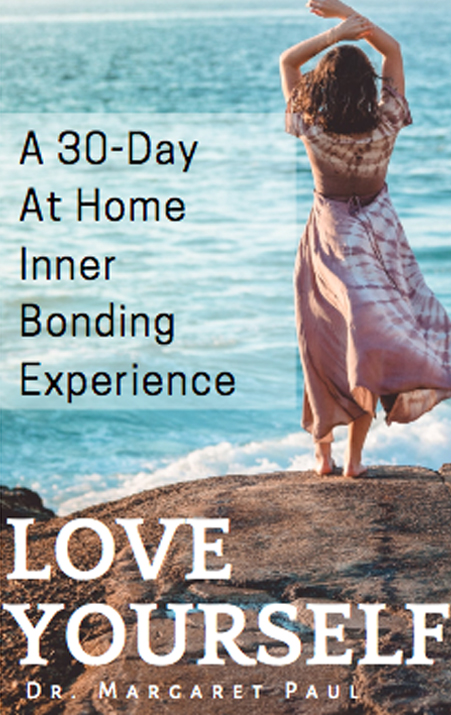
Sincerely asking these questions can begin to regulate your system, and this is why I created my Love Yourself 30-Day course. If you’re looking to learn how to regulate your nervous system, then this course is for you. You can learn more in the description below.
Let’s bring this together regarding why you might feel like a mess.
You may feel like a mess because your nervous system is dysregulated due to the challenging external factors that many of us currently have to deal with. This leads to old survival self-abandoning patterns being triggered, which creates even more stress, because now you are trying to control rather than learn.
What your nervous system needs is a strong inner spiritually connected loving adult to take over and learn ways to regulate your nervous system. Healing begins to occur as you learn and practice Inner Bonding and develop your loving adult, who is open to learning about what regulates your nervous system.
Regulation begins with awareness. The first step is simply noticing, and instead of saying: “I’m a mess,” try saying, “I’m feeling activated right now,” or “I’m feeling shut down, so this is a good time to calm my nervous system.”
This awareness shift creates the space to shift your intention from controlling to loving, which is what activates the loving adult.
This is the part of you that opens to your feelings with an intent to learn what they are telling you and brings compassion to your feelings rather than judgment. It’s the part of you that seeks truth and comfort from your higher guidance and takes loving actions on your own behalf and on behalf of others. It’s your loving adult who is able to take the loving actions to regulate your nervous system.
There are various systems that might be helpful to you in regulating your nervous system. One of them is vagal breathing, which is breathing in for a count of 3 or 4, and breathing out for a count of 6 or 8, or 4 in, hold for 4, out for 4, hold for 4, while bringing in comfort and compassion to your inner child.
Another powerful way of regulating your nervous system is the Emotional Freedom Technique, EFT. You can learn this online with my friend Dawson Church, or on YouTube, or with Nick Ortner at The Tapping Solution. I’ve successfully used EFT for over 35 years, so I know it to be a powerful way of self-regulating.
Some people benefit from EMDR – Eye Movement Desensitization and Reprocessing, and this is best done with an EMDR practitioner. Others benefit from SE – Somatic Experiencing.
Each person needs to find what works for them. For me, vagal breathing and EFT are what works for me, but only if I’ve also done Inner Bonding to be sure that I’m operating as a loving adult. These processes may not help if you are doing them from your wounded self.
It’s your loving adult who remembers to do the vagal breathing, and even a few slow breaths can signal safety to your body. It’s the loving adult who remembers to get present in the moment and is able to show the inner child that the moment is safe – unless it’s actually not safe, and then the loving adult tunes into what you need to do to be safe. It’s the loving adult who is able to offer compassion, letting your inner child know that he or she isn’t alone, which is the opposite of self-abandonment.
It’s the loving adult who opens to learning with your higher guidance asking, “What would be one loving action right now?” It might be holding a doll or stuffed animal that represents your inner child and bringing in love, compassion, and comfort. It might be walking in nature, or setting a boundary with someone, or asking someone for help and support. It might be looking into supplements or homeopathic remedies that help to regulate the nervous system or shifting your diet to foods that calm rather than agitate. It might be doing EFT, EMDR, or SE.
You might want to try this right now. If you can, close your eyes and take a couple of deep breaths. Use your breath to take you inside your body, becoming aware of both physical sensations and emotions. Move toward your feelings with compassion, welcoming them as important information for you. If you notice the overwhelm or numbness that might be coming from nervous system dysregulation, consciously open to learning and invite the love, strength, and courage of your higher guidance into your heart, and then say to your inner child, “I see how hard this is for you. I’m here with you and spirit is here with us. We are not alone.”
Now ask your higher guidance, “What does my inner child need from me right now to feel safe?” Then just listen with openness and without pressuring yourself to hear your guidance. If an idea pops into your mind, then either take the loving action or imagine taking it and notice how you feel. Even a small shift toward love begins to regulate your system.
I hope you can see that it’s likely that you are not the mess you might think you are, but that you are a human being with a nervous system that adapted to your experiences, and that you might be being triggered by today’s challenges. And now you have the opportunity to learn a new way of being with yourself, a way that is loving, compassionate, present, and supportive rather than self-abandoning.
I hope you can see that when you feel dysregulated, you don’t have to be a victim of it. You can learn to shift your intention from controlling to learning and loving and connect with your higher guidance for the truth about your false beliefs and the loving action toward your inner child. You can learn processes such as vagal breathing and EFT to regulate your nervous system.
Healing nervous system dysregulation is not about forcing yourself to be different. It’s about learning to be with yourself in a new way that creates inner safety by shifting from control to learning and, day by day, developing
your loving adult. By practicing Inner Bonding, you create new neural pathways in your brain for the loving adult.
So now, when you notice yourself thinking, “Why am I such a mess?”, pause and ask instead, “What is my nervous system trying to tell me right now?”
“How can I be loving to myself in this moment?”
These questions, asked from a sincere desire to take compassionate responsibility for your feelings, begin to change everything.
I hope you have the courage it takes to move from self-abandonment to self-love.
If today’s episode has been helpful for you and you’re ready to learn more, I invite you to check out my 30-Day video course, Love Yourself. It’s an Inner Bonding experience designed to heal anxiety, depression, shame, addictions, relationships, and nervous system dysregulation. You’ll find the link in the description.
Thank you for joining me today, and I’ll see you in the next episode.
I’m sending you my love and my blessings on your healing journey.