

Episode Summary:
Why do people embrace beliefs of racial superiority? Dr. Margaret Paul explores the psychological and spiritual roots of white supremacy through the lens of Inner Bonding—and how the need for superiority can grow from deeper feelings of shame, fear, and insecurity.
Learn how the wounded self may use comparison, blame, and group identity to seek a sense of worth and belonging. Dr. Margaret also explains why hatred can mask vulnerability, and how false belonging built on exclusion differs from genuine connection.
Discover how healing core shame and developing genuine self-worth can help replace comparison with compassion, domination with connection, and separation with a sense of shared humanity.
Transcription:
Hi everyone, and welcome to the Inner Bonding Podcast. I’m Dr. Margaret Paul, and today we’re exploring a challenging but vitally important topic:
Why White Supremacy? What are the underlying causes of white supremacy? Why do some people come to believe they are inherently superior to others based on race, ethnicity, culture, gender, sexual orientation, or ancestry? What are the deeper psychological and spiritual dynamics that lead human beings to embrace ideologies of superiority, domination, violence, and hatred?
Today, I’m approaching this topic through the lens of Inner Bonding, because while white supremacy has historical, political, social, and economic dimensions, it also has profound psychological roots.
The question isn’t only: “Why do people become white supremacists?” The deeper question is: “What happens inside a person that makes any ideology of superiority feel necessary?”
White supremacy is one expression of a larger human problem—the need to establish worth through comparison, judgments, hierarchy, domination, and exclusion. When we understand the deeper roots, we can better understand how healing can occur.
Today I’m going to explore:
- The psychology of superiority
- The connection between shame and domination
- Fear and the need for control
- The role of disconnection from self and spirit
- Group identity and belonging
- Why hatred often masks vulnerability
- And how genuine self-worth dissolves the need for supremacy
This conversation is not about excusing harmful beliefs and behaviors. Rather, it’s about understanding the inner dynamics that allow such beliefs to take hold in the first place.
At the heart of Inner Bonding is the understanding that every human being needs a sense of inner worth and safety, but the question is not whether we need worth, but about where we seek it.
When people do not experience their intrinsic worth as human beings, they generally seek worth externally. Since most of us didn’t experience the kind of loving parenting that promotes a deep sense of self-worth, most of us learned to seek it externally through getting approval for our looks, status, wealth, and achievements.
But when people are brought up by parents who defined their worth by their whiteness and their Christianity, and often by their male gender, they tend to follow suit, believing themselves to be superior to anyone who isn’t a white male Christian. They seek superiority through group identity with other while male Christians.
While my parents were far from loving parents, one thing they instilled in me was a deep understanding that all human beings deserve equal rights. I was marching for civil rights with my father by the time I was six years old. I saw that my parents, especially my father, treated all human beings as equal, never judging them based on race, religion, status, gender, or ethnicity. Thankfully, I was brought up with no sense of superiority or prejudice.
However, many of my open and caring clients were brought up by unloving, neglectful, abusive, and prejudiced parents, and especially today, have a hard time being around parents and siblings who continue to be deeply prejudiced. Why are these white Christian people, both men and woman, not white supremists?
I don’t have all the answers regarding why one member of an unloving, neglectful, and abusive family turns out so different than the rest of the family, but I do have some ideas. These clients were always very different than the rest of their family – more compassionate, empathic, and sensitive. Their wounded selves learned to be the people-pleasers, mediators, and caretakers in their family of origin. They are generally very intelligent and well-educated, and in college, they were exposed to people who are very different than the people they grew up with. Perhaps we can call them older souls, capable of experiencing the oneness with all of life. It’s not that they didn’t feel the same shame and inadequacy of the rest of their family. It’s that they chose a different way of getting approval and trying to feel safe.
They come to me to do their inner work to learn to define their own intrinsic worth.
On the other hand, the wounded selves of the white supremists believe that if they can belong to a group deemed to be superior, they can temporarily escape their feelings of inadequacy, shame, and fear. These people believe, as their parents believe or believed, that their group is superior so they are superior.
This offers them temporary relief from the inevitable shame, fear, and insecurity that results from unloving, neglectful, or abusive parenting, resulting in not valuing their intrinsic worth. But because it is externally derived, it never creates genuine self-worth. The underlying insecurity, coming from their wounded self, which tells then that they are stupid, inadequate, and not good enough, remains. The acting out of blame and violence stems from their fear, shame, and insecurity.
One of the deepest wounds human beings carry is core shame. Core shame is the false belief that there is something fundamentally wrong with you. When people have not healed this wound, they often seek ways to avoid feeling it.
One common strategy is comparison. The wounded self says: “If I can be better than someone else, then maybe I’m okay.” Rather than recognizing the inherent value of all people, the wounded self begins ranking people as superior or inferior, as smarter or dumber, as attractive or ugly, as better or worse.
Once human worth becomes conditional and comparative, the resulting prejudice may be aimed at race, religion, nationality, gender, or sexual orientation, or at all of them which is often the case with white male supremacy.
Whatever the prejudice, the underlying psychological mechanism is often similar, which is that the wounded self seeks relief from shame and feelings of inferiority through superiority, and supremacy is one manifestation of this underlying dynamic.
As I said, fear also plays a major role. The ego wounded self often responds to fear by looking to blame others, especially a group of others. When people feel insecure, uncertain, or threatened, the wounded self often seeks control. For example, in Germany during Hitler’s reign, many people experienced economic insecurity and looked for someone to blame. Since many Jews hold education as a high priority, they didn’t have as much economic challenges as non-Jews, and so they were an easy target for prejudice, and we all know the outcome of that.
White supremacist groups often provide a sense of belonging, a sense of superiority, a sense of certainty, and they provide targets for blame. For someone struggling with fear and insecurity, these can be psychologically seductive.
Of course, understanding this does not excuse their false beliefs and resulting harmful behavior, but it does help explain why these false beliefs and often violent behavior take root.
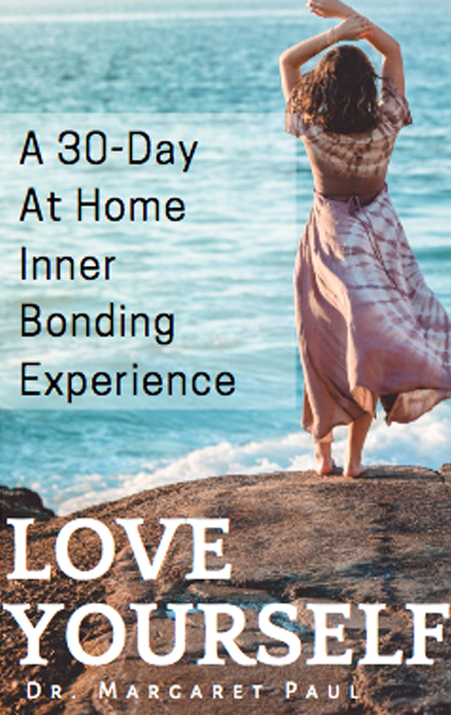
Before I move on, if you’re looking to learn Inner Bonding, heal your wounded self and develop a deep sense of self-worth, my 30-Day video course is for you. You can learn more in the description below.”
Human beings are social creatures and we long for connection and belonging. When people feel isolated, rejected, unseen, or disconnected, they become vulnerable to groups that offer identity and acceptance.
When children are brought up by judgmental racists parents, and/or parents who are rejecting, critical, neglecting, and abusive, these people are vulnerable to the supremacist movements that provide a powerful sense of belonging. They create a strong “us versus them” mentality. The group becomes a substitute family – a family that accepts them and the sense of shared identity reduces feelings of loneliness and isolation.
But this belonging is often built on exclusion and hostility. The wounded self may feel safer, but genuine connection remains absent and elusive. Real belonging comes from authenticity, empathy, and mutual respect. False belonging often depends on defining others as outsiders.
From a spiritual perspective, supremacy becomes possible when we lose awareness of our shared humanity and a sense of oneness with all of life. When we are disconnected from our soul and our spiritual source, we become identified primarily with the external differences of race, nationality, religion, gender, and sexual identity. We forget the deeper truth that beneath our differences, we are all human beings sharing the same essential needs to love and be loved, to feel safe, to experience sense of belonging, to feel that we matter, and to live meaningful lives.
The irony regarding white Christian supremists is that they are anything but Christian. They are completely disconnected from God that is love. If they were connected to Jesus, they could not act out in ways that harm others. And why don’t they realize that Jesus was not white and was “woke”?
When people experience their connection with spirit, compassion naturally expands. The illusion of separation begins to soften, and the need to dominate diminishes, along with the need to prove superiority. The more deeply we experience our interconnectedness, the harder it becomes to dehumanize others. And dehumanization is a necessary ingredient in all forms of supremacy.
I’ve heard of white male supremists state that they believe that some races are less than human. How come they can look at dogs or horses of different colors and not think they are less than dogs or horses, but that people who are not white are less than human? They don’t judge animals by their color or breed, but they do judge humans by their color or religion or gender or nationality.
I see with my clients that the more they get to know the beauty of their own soul, the more they are able to feel a sense of oneness with the souls of all people, as well as with animals.
One of the ironies of white supremacy is that they completely miss out on the inner knowing of different races, especially indigenous people who have deep wisdom about keeping our planet healthy. We are currently in dire need of their wisdom as our planet is suffering so greatly from climate change. Our planet was healthy for eons before white men took over, acting from greed instead of from caring.
One of the most misunderstood truths about hatred is that it often masks a deep sense of vulnerability. Anger and hatred and contempt can feel powerful. But beneath these emotions there is often fear – fear of inadequacy, of insignificance, of powerlessness, of loss, and of uncertainty.
The wounded self would rather feel powerful through anger, hatred, and violence than vulnerable through self-reflection. This is why healing requires courage. It requires looking beneath the defensive certainty of white supremacy and acknowledging the pain that has been hidden. It requires having the courage to open to the pain and fear that lie beneath white supremacy, and it requires opening to compassion and empathy for oneself and for others – for people, animals, and for the planet.
So what is the alternative?
The alternative is not shame. People don’t heal through being shamed. The alternative is developing genuine self-worth. When we know our intrinsic worth, we no longer need to establish superiority.
When we define our worth through our connection with our higher self, our spiritual source, and discover our intrinsic goodness and lovability, as well as our unique gifts, we stop needing external validation.
Here is where learning and practicing Inner Bonding comes in. As we discover the fears and false beliefs of our wounded self, discovering our overt and covert forms of control, and do the inner work of developing our spiritually connected loving adult, we come to understand that our worth isn’t about being better than anyone, and isn’t about depending on belonging to a group we deem superior. We see that rather than our worth being about domination, it comes from who we are as a unique expression of the Divine. Embracing the true gift of who we are transforms relationships, communities, and cultures, because people who genuinely value themselves do not need to diminish others. The more secure we become internally, the less invested we become in hierarchy and exclusion.
Love replaces comparison. Compassion replaces contempt. Connection replaces separation, and over time and practice, we experience our oneness with all of life. We experience the joy of feeling our oneness with people, animals, the planet, and God.
Everything changes when we have the courage to do our inner work and heal the false beliefs and resulting controlling behavior of our ego wounded self.
As we close today, I want to emphasize that the deeper issue behind white supremacy is not ultimately about race. The deeper issue is the wounded self’s attempt to create worth through superiority. White supremacy is one manifestation of a broader human tendency to seek security, belonging, and value through domination and exclusion.
When we understand this, we can begin addressing the root rather than only the symptom.
The healing path of Inner Bonding involves healing core shame, developing genuine self-worth, learning emotional responsibility, opening to spiritual truth, experiencing our interconnectedness and oneness, and consistently choosing love over control
The more deeply we know our own worth, the less need we have to prove it through comparison. And the more deeply we experience our connection with all of life, the less capable we become of seeing others as inferior.
Remember that every act of genuine self-love helps dissolve the fear, shame, and separation that give rise to all forms of supremacy. The path to healing the world begins with healing the wounded self within.
Peace begins when we stop seeking superiority and start remembering our shared humanity and experiencing our oneness with all of life.
Thank you for joining me today. If today’s episode feels important to you and you’re ready to learn to define your own self-worth and connect with your higher guidance, I invite you to check out my Love Yourself 30-Day video course. You’ll find the link in the description.
Thank you for joining me today and I’ll see you in the next episode.
I’m sending you my love and my blessings on your healing journey.