

Episode Summary:
How do you choose the right therapist, counselor, or facilitator? In this episode, Dr. Margaret Paul explores why experience, personal healing, and the ability to guide clients beyond intellectual understanding matter when seeking emotional support.
You’ll learn how a therapist’s own inner work can influence their ability to help, why insight alone doesn’t always lead to healing, and how Inner Bonding can help you develop a more loving relationship with yourself.
Dr. Margaret also shares questions to ask when choosing a therapist, signs to notice in the therapeutic relationship, and why effective support encourages emotional responsibility rather than dependence.
Transcription:
Hi everyone, and welcome to the Inner Bonding Podcast. I’m Dr. Margaret Paul, and today we’re going to talk about a subject that may affect the course of your healing more than almost anything else:
How do you choose the right therapist, counselor, or facilitator?
People write to me and say, “I’ve been in therapy for fifteen years and I’m still stuck.”
Or they’ll say, “I’ve seen six therapists, and none of them really helped me.”
Or perhaps, “I’m afraid to start therapy because I’ve had such disappointing experiences.”
My heart goes out to people who have spent years—and often thousands of dollars—working very hard in therapy, only to find themselves still struggling with the same anxiety, depression, relationship issues, addictions, trauma, or feelings of emptiness. Sometimes they conclude that therapy doesn’t work, or that they’re simply beyond help. But most of the time, neither conclusion is true. Sometimes the issue isn’t that therapy failed, but that the therapist didn’t have the necessary experience to be of help to them.
Dr. Erika Chopich and I were talking recently about this topic of why experience matters, and how often we see people getting hurt by inexperienced coaches, and she suggested that I do a podcast on this topic.
Imagine deciding to climb Mount Everest. Would you hire someone who had read several excellent books about mountain climbing but had never actually climbed a mountain? Probably not. You would want someone who had made the climb many times. Someone who knew where people get into trouble. Someone who could recognize danger before you saw it. Someone who had personally experienced exhaustion, fear, setbacks, and success.
If you need to your appendix out, would you go to someone who never went to medical school? If you have a toothache, do you want to try do-it-yourself dentistry? If your heart is hurting, do you really want to see someone who hasn’t dealt with their own wounds?
Emotional healing is much the same. A therapist isn’t simply teaching information. A therapist is accompanying you through some of the most vulnerable places of your life, and this is why experience matters.
When I look on Facebook, I see people advertising inner child work, or advertising that in two weeks they can receive a certificate in trauma healing. Often, when I look them up, I can see that most of them have little training or experience.
Experience matters. There are many very gifted therapists doing extraordinary work, but there are also important differences among therapists – differences that clients often don’t know to look for.
My hope is that today’s conversation will help you become a wiser consumer of receiving emotional help and a better advocate for your own healing.
One of the greatest misconceptions people have is believing that academic knowledge automatically creates therapeutic effectiveness, but knowledge is not at all the same as the wisdom that comes from years of experience with their own healing and with their work with others.
A person may have multiple advanced degrees. They may know every diagnostic category in the DSM. They may be able to explain attachment theory beautifully. They may understand trauma intellectually. And yet they may not know how to help someone actually heal.
Healing is far more than information. Think about learning to play the piano. You could spend years studying music theory. You could memorize every note. You could understand rhythm, harmony, and composition. But until your fingers spend thousands of hours on the keyboard, you won’t become a proficient pianist.
Therapy is similar. Therapists, counselors, or facilitators who haven’t done their own inner healing work or have little experience in helping others, are not equipped to understand the deeper issues, which is essential for helping clients heal. One of the blessings of having worked with thousands of people over many decades is that patterns become quickly visible. I have a very easy time recognizing subtle inner dynamics and dynamics in relationships.
Often, I can hear one sentence from a client and immediately recognize the underlying issue that may take someone less experienced months to identify.
Experience for a therapist must include years of their own inner healing because a therapist can take clients only as far as they have gone themselves.
Imagine someone trying to teach you to swim who has never entered the water. They can explain floating. They can explain breathing. They can explain arm movements. But when panic sets in and your body stiffens from fear, their knowledge has limits.
Healing is like that. Clients don’t simply need techniques. They need someone who knows what it feels like to sit in fear without running from it. Someone who has learned to comfort their own inner child and access the love that is here for them. Someone who has healed their own trauma, shame, and control issues, and someone who has grieved the loss of loved ones.
They need someone who has learned to surrender to spirit.
Inner Bonding is not merely a method – it’s a way of living. When I’m asking someone to learn to take emotional responsibility, I need to be practicing emotional responsibility myself.
When I’m asking someone to love themselves, I need to be actually doing that myself so I can guide them on an in-depth level. I need to be a role-model for self-compassion and self-love and this comes only from my own Inner Bonding work, which I continue to do as a way of life.
My client Sarah came to me after seeing therapists for nearly twenty years. She said, “I understand why I have anxiety.” She could explain every childhood wound. She knew attachment theory. She understood family systems. She had remarkable insight. Yet every morning she woke with crippling anxiety.
She looked at me and said, “I know why I feel this way, but nothing changes.”
Have you ever noticed that insight alone doesn’t always create transformation? Understanding your childhood isn’t the same as healing your ego wounded self, your inner critic.
Sarah had learned to analyze herself, but she hadn’t learned to love herself. Every time anxiety arose, she judged herself. She tried to think her way out of it. She explained it and analyzed it and interpreted it. But she never asked the frightened little girl inside, “What am I telling you and how am I treating you from my wounded self that’s causing this fear?” And she never brought compassion to her inner child.
Within months of practicing Inner Bonding – not perfectly, but consistently – her relationship with herself began changing. The anxiety didn’t disappear overnight, but something new was happening – she had mostly stopped abandoning herself. She finally had someone inside who cared – her developing loving adult.
This is why I created my 30-Day Love Yourself video course. If you’re looking to support your healing and develop your loving adult, you might want to look into this powerful course.
You can learn more in the description below.
Experience helps me see what isn’t being said. I’ve learned over many decades that when clients tell me the presenting problem, they are rarely aware of the real underlying problems.
For example, a client says, “My husband never listens to me.” Maybe that’s true, but after listening to her, I discover that one of the the deeper issues is that she never listens to herself – to her own feelings, her inner child. Her husband might be treating her the way she treats herself, which is very common.
Or a client says, “My wife is often angry and tries to control me.” She likely does, but I discover that he has spent his life giving away his power because he’s terrified of rejection.
Many people are very clear on what someone else is doing but often have no idea of their participation in the system. They have no control over their partner’s end of the system, but total control over their own end of the system.
Or a client says, “I can’t stop overeating.” But the underlying issue might be loneliness or grief or deep self-rejection, or it might be due to a severe imbalance in their gut, and the toxic bacteria are constantly craving the wrong food.
If a therapist doesn’t have years of experience in dealing with these issues within themselves, they likely lack the experience to help their client, which is why I’m so concerned about all the ads on Facebook from people who have limited training and little experience.
Here is an example: Julia consulted with me because of her anxiety regarding relationships. She said, “My boyfriend doesn’t call me for days, and then suddenly he wants to see me. I get so anxious when he doesn’t call.”
A beginning therapist might spend several sessions focusing on communication skills and conflict resolution. But I asked her more about what she feels when he doesn’t call and she said, “I feel like I disappear. I don’t matter. I’m not important.”
Now I’m aware of the deeper issue, and I asked her about what this reminds her of as she was growing up. Tears came immediately as she said, “My father ignored me for weeks whenever he was angry.”
The boyfriend isn’t creating the wound – he’s activating an old wound. Without experience, it’s easy to stay on the surface. Experience helps us recognize where healing actually needs to occur. With Julia, like with so many of my clients, the trauma of her childhood is getting repeated by her own wounded self through her self-abandonment, which results in her inner child feeling unimportant to her and not mattering. If she didn’t have this wound from her father, either she wouldn’t feel anxious when her boyfriend didn’t call, or she wouldn’t be with a partner who was so inconsistent.
If you’re with a therapist who needs to be right, you might want to re-evaluate. The best therapists remain students, always learning about themselves and about what actually creates healing. Early in my career, I believed I knew more than I actually did, but now, decades later, curiosity has replaced certainty.
Healing isn’t about me being the authority on your life. It’s about helping you reconnect with your own inner wisdom. A therapist who wants to be the authority in your life, rather than helping you become your own guru, fosters codependence.
Unfortunately, some therapists create dependency, which isn’t at all healing. Clients might remain in therapy for years without becoming more capable of taking responsibility for their own feelings, needs, and well-being.
With a codependent therapist, decisions require the therapist, and crisis requires another session. A good therapist, counselor, or therapist wants to become unnecessary, which happens as they develop their own loving adult through their Inner Bonding process.
David came to me after years of relationship therapy with numerous therapists. He told me that he had learned excellent communication techniques, but that he still exploded with anger.
As I learned about his growing up years, it became obvious that David was terrified of feeling helpless. Having been verbally abused and humiliated by his mother, whenever his wife disagreed with him, his wounded self interpreted disagreement as humiliation, and he would get angry try to control his wife, hoping with his anger to avoid feeling humiliated and helpless. His anger wasn’t really about his wife – it was about avoiding the fears and painful feelings.
No amount of communication skills could heal that. He first had to learn how to comfort the frightened little boy who believed he would be hurt and abandoned if there was any conflict with his wife. Only as he learned to be a loving mom and dad with his inner child did the communication tools become effective. Without addressing the underlying wounds, techniques remained superficial, just scratching the surface.
Here are some questions you can ask before choosing a therapist, counselor, or facilitator:
- Has this therapist done significant personal healing work?
- Do they continue learning?
- Can they tolerate emotion without trying to fix it immediately?
- Do you feel seen?
- Do you feel judged?
- Do they become defensive when questioned?
- Can they admit mistakes?
- Do they encourage emotional responsibility rather than dependence?
- Do they embody what they teach?
While education and training matter, they alone are not enough. A good therapist doesn’t just train, they embody the learning.
One thing I always encourage people to notice is how they feel in the therapist’s presence. Not whether they’re comfortable all the time because healing and growth often feel uncomfortable. You might not always want to hear what they therapist says regarding your wounded self, but hopefully the therapist provides a safe space for you to do the hard inner work. And hopefully the therapist sees who you are in your soul and helps you to own your goodness and gifts. And hopefully the therapist knows how to help you access your inner wisdom so that you can become your own loving adult.
Our wounds occurred in relationship to our caretakers, and healing happens in relationship. An experienced therapist provides the role-modeling for healing self-abandonment and learning to love yourself.
Truly experienced therapists don’t foster dependence them. They help you become more deeply connected to your own loving adult, your own inner wisdom, and your own higher guidance. They help you discover the worth that has always been there beneath the layers of fear, shame, and self-abandonment. Experience matters because healing isn’t merely an intellectual process – it’s an embodied journey.
And someone who has walked that path personally – and has accompanied thousands of others along it – can often recognize the landmarks, the detours, the pitfalls, and the breakthroughs that aren’t found in any textbook.
If you’re looking for a therapist, don’t settle simply for impressive credentials. Look for someone whose presence brings healing. Someone open to learning about you and about themselves. Someone whose own healing shines through their work. Someone who genuinely believes in your capacity to heal rather than your need to remain broken.
And remember this: The most important relationship you’ll ever have is not with your therapist. It’s with yourself. A gifted therapist will never replace that relationship. They will help you strengthen it.
If you’re ready to learn more about Inner Bonding and loving yourself, I invite you to check out my 30-Day video course, Love Yourself. You’ll find the link in the description. This course, along with our many other courses and books, are all over the world.
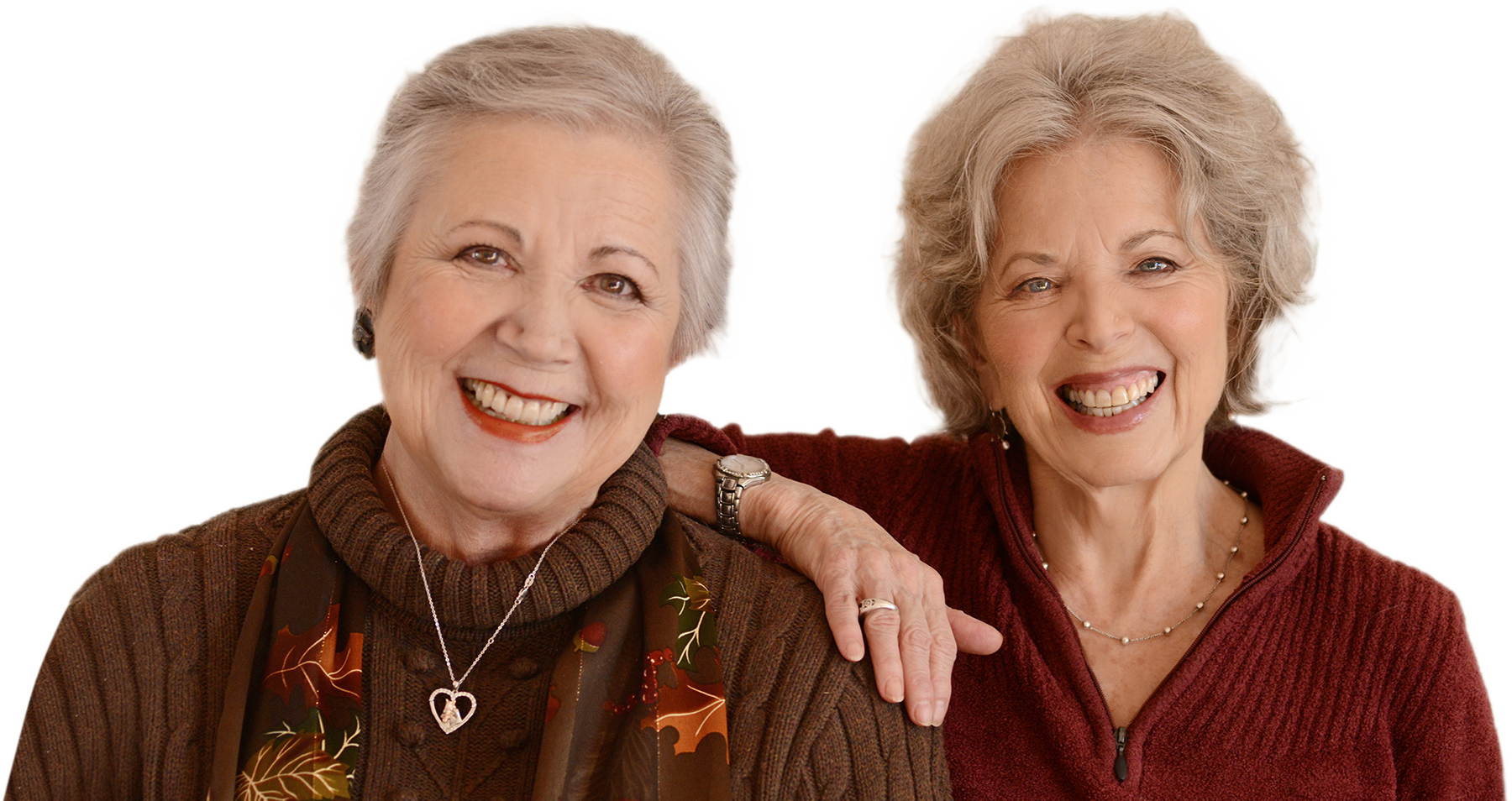
Dr. Erika Chopich, the co-creator of Inner Bonding and my Golden Girl best friend, said of me, “No one is a wiser sage that Dr. Margaret Paul, who understands the tapestry that is you, regardless of the depth of your trauma.”
Be sure to subscribe wherever you listen to podcasts, leave a review and subscribe on YouTube.
Thank you for joining me, and I’ll see you in the next episode.
I’m sending you my love and my blessings on your healing journey.