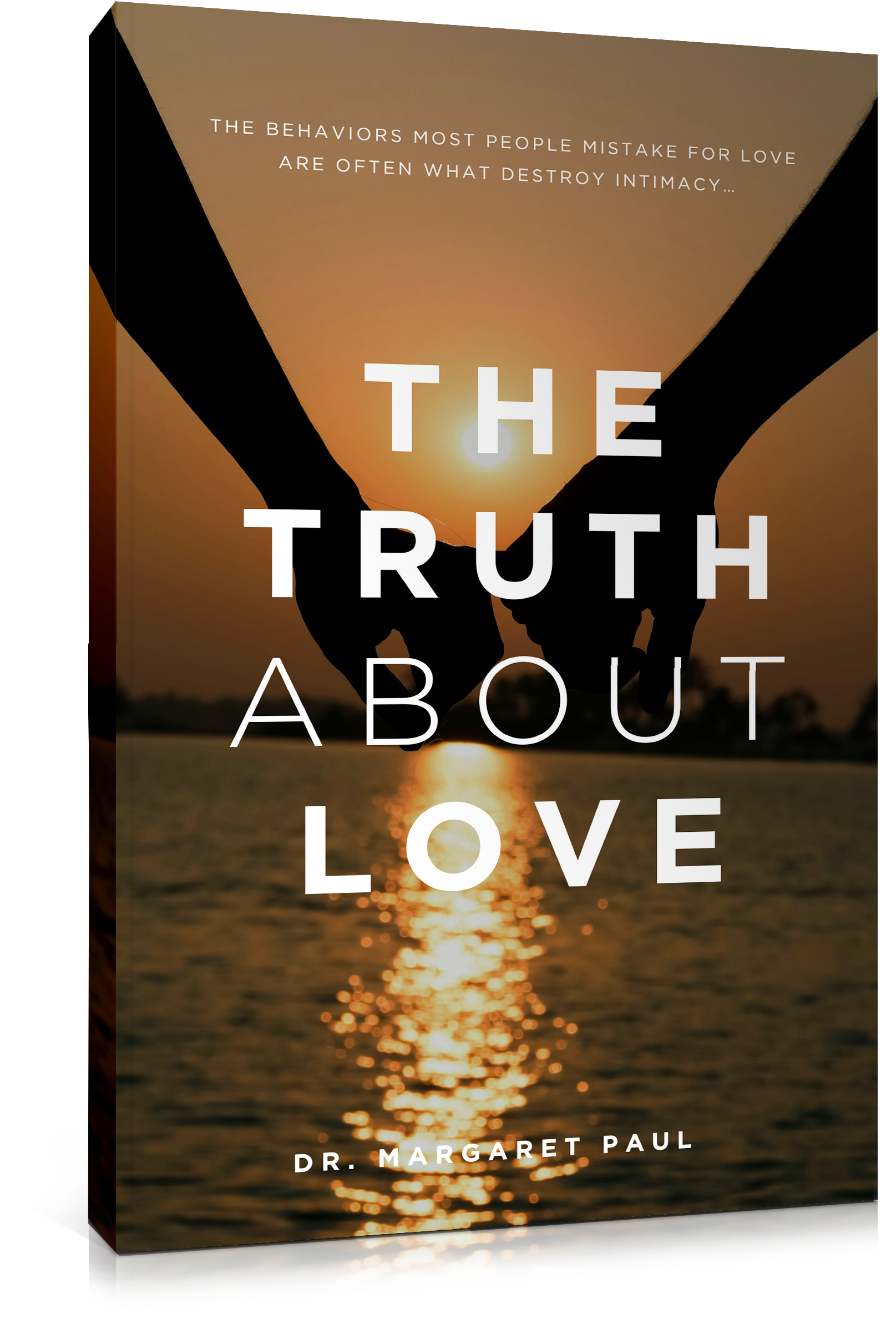
The behaviors most people mistake for love are often what destroy intimacy…

The Truth About Love

The hidden beliefs and actions that create disconnection—and how to change them

Most people want love — desperately.

They want to feel close, connected, safe, and supported by the people they care about most.

And yet, despite all the effort people put into creating love, many experience the opposite instead:

Distance. Conflict. Loneliness. Emotional exhaustion.

You may feel like you are working incredibly hard to create closeness with your partner — trying to stay connected, avoid conflict, keep things good between you — while quietly carrying the pain of not feeling as loved, safe, or emotionally met as you hoped you would.

Or perhaps you pour enormous amounts of care, energy, and attention into your children, yet still find yourself hurt by conflict, saddened by distance, or longing for more warmth, ease, appreciation, and mutual closeness between you.

Old patterns with family never seem to change. Conversations leave you frustrated, unseen, or emotionally drained.

And this is what most people never realize:

The problem is often not a lack of love.

The problem is a misunderstanding of what love actually is.

Because many of the things people believe are loving — over-giving, caretaking, sacrificing themselves, trying to manage others’ feelings, trying to avoid conflict, trying to keep everyone happy — are not actually expressions of love at all.

They are attempts to get love, secure love, or control the loss of love.

And while these behaviors are often well-intentioned, they quietly create the very disconnection, tension, resentment, and loneliness people are trying so hard to avoid.

The Problem Isn’t Them. It’s In Our Understanding of Love

Most people were never taught what love actually is.

They were taught how to be good. Needed. Wanted. Approved of.

They learned how to adjust themselves in order to maintain connection and avoid rejection, conflict, loneliness, or loss.

So when relationships begin to feel painful, distant, disappointing, or unsafe, most people instinctively move into some form of control in order to try to feel loved again.

Sometimes that control looks soft and self-sacrificing.

People give more.
Accommodate more.
Caretake more.
Over-explain.
Walk on eggshells.
Try to keep everyone happy.
Abandon themselves in order to maintain connection.

And because these behaviors often look caring on the surface, they are frequently mistaken for love.

But control also has another face.

Sometimes people try to get love through anger, blame, criticism, withdrawal, defensiveness, guilt, punishment, interrogation, or demands.

They may try to pressure others into changing, becoming more attentive, more available, more understanding, more loving.

Or they shut down, withdraw affection, become cold or resentful, hoping the other person will finally understand their pain and respond differently.

Whether the control appears “soft” or overt, the intention underneath is often the same:

To have control over getting love, avoiding pain, avoiding rejection, or feeling safe.

And this is where so much relationship pain begins.

Because control — even very understandable, well-intentioned control — is not love.

Love and control come from entirely different places inside us.

The more people try to control in order to feel loved, the more intimacy, connection, safety, and closeness tend to break down.

Not because they are bad people.

But because many of the behaviors they learned to think of as loving are actually fear-based attempts to secure love externally rather than create love internally and share it with others.


Why Everything Changes When You Understand What Love Really Is

Until we understand what love actually is — and what loving behavior truly looks like — we will often continue repeating the same painful relationship patterns no matter how hard we try to change them.

No amount of communication skills, relationship strategies, effort, sacrifice, or commitment can fully work when the underlying understanding of love itself is distorted.

People can spend years trying to improve their relationships while still operating from fear, control, self-abandonment, guilt, resentment, caretaking, blame, withdrawal, or emotional dependency — believing all the while that they are being loving.

This is why I wrote The Truth About Love.

Not as another book about communication techniques or relationship strategies, but as something much more foundational:

A guide to understanding:

  • what love is
  • what love is not
  • what is truly loving to yourself and others
  • and the many ways fear and control disguise themselves as love

Because once you begin recognizing the difference between love and control, your relationships begin to change from the inside out.

You begin to see more clearly:

  • when you are abandoning yourself in the name of love
  • when you are trying to control rather than connect
  • and what loving action actually looks like in everyday life

And this understanding becomes the foundation for creating relationships that feel more connected, honest, supportive, joyful, and emotionally fulfilling.

Inside The Truth About Love

In this book, I’ll help you understand the essential distinctions most people were never taught about love, intimacy, and emotional connection.

Through practical insights, compassionate guidance, and real-life examples, you’ll begin recognizing the hidden patterns that create relationship pain — and learn what it actually means to create love rather than try to get it.

Inside, you’ll discover:

✔ The difference between love and control — and how control quietly damages intimacy
✔ Why caretaking, people-pleasing, anger, withdrawal, and over-giving are often attempts to get love rather than expressions of love
✔ How self-abandonment erodes closeness in every relationship — including the relationship with yourself
✔ What truly loving behavior looks like with a partner, children, family members, friends, and yourself
✔ How to recognize when you are acting from fear rather than love
✔ What creates emotionally safe, mutually supportive, joyful relationships that feel alive rather than draining

This is not a book filled with complicated psychological theory or surface-level relationship advice.

It is a clear, compassionate guide to understanding one of the most important and misunderstood parts of human life.

And once these distinctions begin to click into place, many people experience an immediate sense of relief. And for the first time, you begin to see a different path forward.

Not through more striving.
Not through trying harder to get love.

But through learning how to be loving — to yourself and others — in ways that naturally create intimacy, trust, closeness, and connection.

This Is Where Loving Relationships Begin

If you long for deeper intimacy, connection, honesty, warmth, and emotional closeness in your relationships, this understanding is essential.

Because when people stop trying to control love and begin learning how to create it, relationships often begin to feel lighter, safer, more mutual, and more deeply connected.

Not perfect.

But real.

And for many people, this understanding becomes the turning point that changes not just one relationship — but every relationship in their life.

👉 Get your copy of The Truth About Love today and begin learning what truly creates connection, intimacy, and lasting love.

Start Creating More Connected, Loving Relationships

Inside this powerful digital book, you’ll learn:

If you long for deeper intimacy, connection, honesty, and emotional closeness in your relationships, this book is for you.

Today: Just $19.97

7 Day Money-Back Guarantee. Lifetime download.

Order Form Notes:

© Copyright 2026 - All Rights Reserved