
S2 EP293 – Facing the Feelings That Fuel Addictions

Episode Summary:
Underlying all addictive behavior is the intent to avoid painful feelings. Addictions are a major form a self-abandonment, leading to the aloneness and emptiness that often underlie addictive behavior. Practicing Inner Bonding heals addictions.
Transcription:
Hi everyone, and welcome to the Inner Bonding podcast. I’m Dr. Margaret Paul and today I’m speaking about what the feelings are that underlie addictions, and how to heal addictions.
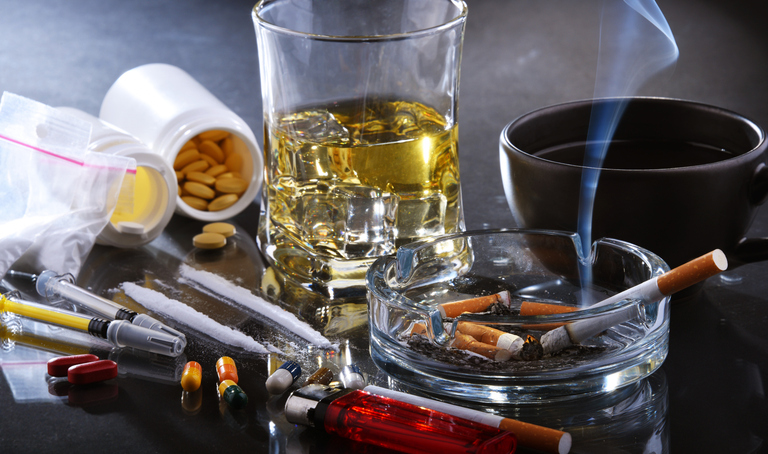
Food, sugar, alcohol, drugs, nicotine and caffeine, as well as process addictions such sex, spending, gambling, TV, scrolling, and so on, are being used addictively when they are a way to avoid feeling your pain and taking responsibility for your feelings. Substance and process addictions are primary ways the ego wounded self anesthetizes against pain. When there is no loving adult to connect with your higher guidance and learn from your pain, the wounded self takes over to create safety with the numbing addictive behavior it has learned.
Underlying all addictive behavior is the intention to avoid pain, especially the deeply painful feelings of aloneness, loneliness, grief, helplessness over others and heartbreak, as well as anxiety, depression, shame, and guilt,
Aloneness is the feeling we have when we are disconnected from ourselves and from a source of spiritual guidance. We have no loving adult with an intent to learn, and our inner child feels abandoned and alone within and in the universe. Aloneness is a feeling we cause by our own self-abandoning, unloving behavior toward ourselves.
How often do you feel alone and empty inside? And how often do you turn to some addictive behavior to avoid feeling these feelings? Take a moment to think about this.
Aloneness and inner emptiness are caused by a lack of love within, and this lack of love is the result of self-abandonment. When we don’t take loving care of ourselves, our inner child feels abandoned, alone, and empty. When you disconnect from your feelings to avoid the pain, then you also can’t connect with others or with your spiritual source of love and comfort. Therefore, you might feel both alone and lonely – a state of despair – when you do not take loving care of yourself – which is when you may turn to various addictive behaviors. And then, numbing with addictions, create more inner aloneness.
One of the major ways we do not take care of ourselves that may lead to addictive behavior is not standing up for ourselves, not speaking our truth and setting our limits in conflict with others. When we give ourselves up, abandoning ourselves in the hopes of pacifying another and controlling how another feels about us, our inner child feels alone, unloved, and unimportant. Rather than feeling these painful feelings and taking responsibility for them, we may turn to various addictive behaviors to avoid feeling these feelings.
One of the quickest ways of moving beyond addictive behavior is to make the decision that you are willing to lose others rather than continue to lose yourself. When you choose to tell your truth, set your limits and take loving action for yourself with co-workers, friends, your partner, parents, or children, rather than allow yourself to be verbally or physically attacked or abused, you may find yourself moving beyond your addictive behavior.
Mary Ann had been an alcoholic for 12 years when she consulted with me. She had tried everything, including AA, to stop drinking but nothing was working. Instead of addressing the drinking directly, we worked on how she was treating herself. She was letting everyone in her life – her husband, her son, her parents, and her business partner run over her and control her. As a result of our Inner Bonding sessions, she diligently went about learning to set loving limits regarding how others treated her, which means she learned to speak up for herinner child and disengage if others continued to treat her badly.
About three months after starting to work with Inner Bonding, she came in all smiles and announced that she hadn’t had a drink in a week, nor had she desired one. It turned out that her desire to drink came from feeling so badly when she let people run over her. As long as she took care of herself, speaking up for herself, setting appropriate limits and then taking action on them, she had no desire to drink.
When you feel loved and safe within, your desire for your traditional addictions gradually fades away. The challenge is, therefore, what make you feel loved and safe within? Spending time learning how to stand up for yourself and speak your truth, rather than let yourself be run over or abused, will go a long way towards creating inner safety and a sense of inner fullness and security.
Our aloneness vanishes when we choose to connect with our own feelings and with our spiritual guidance and bring love and compassion to our own feelings.
Loneliness is the feeling we have when there is no one to share love with, either because there is no one around, or because those around us are closed to sharing love with us, or because we are closed to sharing love with them. If we are closed to sharing love with them, we will feel both alone and lonely, even if we are around people.
Loneliness is an existential fact of life that we need to learn to manage rather than avoid with our addictive behavior. Inner Bonding is a wonderful process for acknowledging, embracing, and releasing our lonely feelings, instead of avoiding them with addictions.
Aloneness and loneliness often feel life-threatening, since they were when we were small. If left alone, we would have died.
Helplessness can also feel life-threatening. When we were small, we were helpless over both ourselves and others. If no one ever came when we cried, we would have died. Today, we are no longer helpless over ourselves – we can get food, call for help, and so on. However, we are still helpless over others, yet most of us don’t want to accept this. We spend much energy trying to control others rather than accepting our helplessness and heartbreak over others unloving behavior toward us, toward others, and toward themselves. When we finally accept it, then we are free to take loving action on our own behalf.
Since it feels so awful and scary to feel helpless or heartbroken, you may attempt to avoid these feelings with your addictions.
You will discover that you will no longer need your addictions once you learn to be a loving adult – acknowledging, welcoming, and compassionately embracing your feelings of loneliness, heartbreak and helplessness over others, and then releasing them to spirit. Simply ask spirit to take these feelings and replace them with acceptance, serenity, peace, joy, or whatever you desire to feel. Once you learn to acknowledge, welcome, embrace and release your feelings, you will no longer need to avoid them with your addictions.
A common addiction is sexual addiction. Sexual addiction is like any other addiction: it is using something or someone to fill you up or take away your pain. Sexual addiction is on a continuum, from mild to severe.
Are you addicted to sex? Identifying with just one of these symptoms that I’m going to list may indicate an addiction to sex or a tendency to use sex addictively.
- I occasionally or frequently use sex to feel good about myself.
- I occasionally or frequently use sex to fill up the emptiness within myself.
- I occasionally or frequently use sex to take away my aloneness.
- I occasionally or frequently use sex to take away my anxiety.
- My sexuality is my identity.
- I think about sex most of the time.
- I often have trouble concentrating on other things due to my preoccupation with sex.
- I have an intense need for sex with my partner. If my partner doesn’t want to have sex with me, I get angry or withdrawn.
- I sacrifice important parts of my relationship for sex. My sexual needs are more important to me than the relationship needs or my partner’s needs.
- My sexual needs and my reaction when I do not get what I want are interfering with my relationship with my partner.
- I have a compulsive need for sex with many partners.
- The pursuit of sex makes me careless of my own welfare and the welfare of others.
- I am chronically preoccupied with sexual fantasies.
- I am promiscuous.
- I am a compulsive masturbator.
- I have a compulsive need to masturbate while viewing pornography.
- I am a voyeur.
- I am an exhibitionist.
- I feel controlled by my sexual desires.
- The only time I feel powerful is when I am imposing sex on someone.
- I am attracted to children.
- I act out with children.
- I force people to have sex with me.
- Hurting others turns me on sexually.
- Being hurt by others turns me on sexually.
Obviously, there are many different levels of sexual addiction. Addiction to sex, like all other addictions, comes from the ego wounded self trying to find a way to feel okay and it cannot be healed without a spiritually connected loving adult. If you desire to heal your addiction to sex or any other addiction, you need to practice the Six Steps of Inner Bonding to develop a loving adult. Practicing Inner Bonding enables you to learn to fill yourself up with love from the inside, rather than turning to addictions to fill up your emptiness and take away your pain.
Before Inner Bonding, I was addicted to using food to avoid my pain. I was also addicted to caretaking – giving myself up to try to get the love I wasn’t giving to myself, and to getting angry when I gave and gave and got nothing back. Food, caretaking, and anger were my addictions of choice.
While I started to eat organic food in my early 20’s, before Inner Bonding I was still using food to fill the aloneness I felt from my self-abandonment. Before Inner Bonding, I had no idea that I was abandoning myself, primarily with my caretaking, which created stress because I was constantly giving myself up to please my family and others. As soon as I was stressed, I would graze the refrigerator or cupboards to find something to soothe my stress. I didn’t realize any of this until I started to practice Inner Bonding in 1985. At this point my inner child got very angry with me for giving her away to others for approval, instead of giving her the love and attention she needed from me.
I was so surprised that as I learned to tune into my feelings, take responsibility for them, and learn to connect with my spiritual guidance, my addictions went away. Stopping caretaking others and learning to take loving care of my own feelings and needs took away the stress that was leading to my food and anger addictions.
However, this doesn’t always happen with my clients, and I discovered over time why some people get stuck in healing their addictions. It has to do with an inner power struggle in their wounded self.
Do you have an inner authoritarian wounded part who tries to control your addictions with declarations and rules? Do you have a resistant wounded part who digs in its heels? This creates an internal power struggle that immobilizes addiction recovery.
The authoritarian wounded self, believing it can have control by just laying down the law, sets rigid limits, such as:
“Today I am starting on my new diet. I will only eat a prepared liquid food for breakfast and lunch, and I will have a normal dinner.”
“From now on, I’m cutting out sugar and junk foods.”
“I’ll start writing down everything I eat.”
“No more drinking. It’s ruining my marriage and it’s time to stop. I’m just not going to drink anymore.”
“I’m finished with these drugs. I’m flushing them down the toilet and never buying anymore.”
“This is my last cigarette.”
“No more spending. We’re going to cut up the credit cards and start to save money.”
“I’m done with gambling – never again.”
“I’m turning over a new leaf. No more porn.”
“My wife is ready to divorce me if I don’t stop pulling on her for sex, and I don’t want to lose her. I’m going to start to practice Inner Bonding.
What generally happens when you set limits like this? Often, as soon as the authoritarian wounded self moves in to control, the resistant, indulgent wounded self takes over and resists, essentially saying things like:
“You can’t tell me what to do. I can eat whatever I want.”
“One drink won’t hurt. We’ll stop tomorrow.”
“Go ahead and flush down the drugs. I can get them again whenever I want.”
“I’m the boss of me. I don’t have to do what you say. I like to smoke.”
“I really do need some new clothes. I can’t go to work looking like this.”
“Gambling gives me the rush I need. You can’t take it away from me.”
“There’s nothing wrong with wanting to have sex with my wife. She should be more understanding about my needs.”
An internal power struggle gets set up: one part of you is saying “Don’t eat,” while the other part of you is grabbing food, saying “Don’t tell me what to do.” Or one part is saying, “No more alcohol,” and the other part is saying “I really need a drink.” Or one part is saying “Smoking is going to kill us,” and the other part is saying “I don’t care. Life is not worth it if I can’t smoke.”
The problem with these controlling decisions is that the authoritarian wounded self does not have the power to carry them out for long. You may be able to follow through for a few days or even for a few weeks, but without a disciplined loving adult who wants to take responsibility for your feelings and whose power comes through you from your higher self, rather from trying to have will power from your wounded self, the permissive, indulgent, resistant wounded self takes over and you find yourself bingeing or eating junk, drinking, using drugs, smoking, spending once again, or getting angry at your partner for not having sex with you.
The authoritarian wounded self tries to have will power by setting rigid inner boundaries, but will power does not come from the wounded self. The will is within the loving adult, and the power comes from your higher guidance. Will power really means using your will to bring through the power of your higher power.
Your wounded self may have a set of false beliefs that govern your behavior regarding substance abuse and process addictions.
The authoritarian wounded self often believes that:
“I have power. I can control what and how much I eat, drink, smoke cigarettes, smoke grass, snort coke, gamble, watch porn, and so on. I can do this by myself without help.”
With anorexia, the wounded self actually does manage to control eating, but the consequences of this are deeply wounding and even life-threatening to oneself.
The permissive, indulgent, resistant wounded self often believes that:
“I am nurturing myself and rewarding myself when I eat whatever I want, drink whenever I want, use drugs whenever I want, scroll the Internet whenever I want, or try to have sex whenever I want.”
Or,
“I can avoid my pain by numbing out with substances or processes.”
Addictions do work to numb out the pain for the moment but in the long run they cause more pain as they erode health and self-worth.
Or,
“The only way I can be my own person is to resist what someone else wants from me, even if I am resisting myself.”
These false beliefs come into constant conflict with each other as the inner power struggle goes around and around.
Permanent recovery from addictions is the result of practicing Inner Bonding and developing your spiritually connected loving adult, who has learned to lovingly manage your feelings rather than avoid them with addictions.
Take a moment right now and, being honest with yourself, tune into your addictions, naming what you do to numb out and avoid your pain…How do you feel later, after acting out addictively?…The chances are your inner child, your feeling soul self, feels abandoned by you, and angry at you for numbing out your feelings instead of learning what they are telling you.
Don’t forget, your inner child, your feeling self, is a powerful source of inner guidance and intuition.
Why not start to practice Inner Bonding today so you can learn to love yourself and heal your addictions?
I invite you to learn Inner Bonding with my 8-Module Inner Bonding Workshop, which you can learn about on innerbonding.com and clicking on Courses, or clicking the link in the transcript: https://innerbondinghub.com/sp/ib-join-2023/. This is a video course with exercises to help you learn Inner Bonding, and includes me working with participants so you can see Inner Bonding at work.
As always, I’m sending you my love and my blessings.



Responses